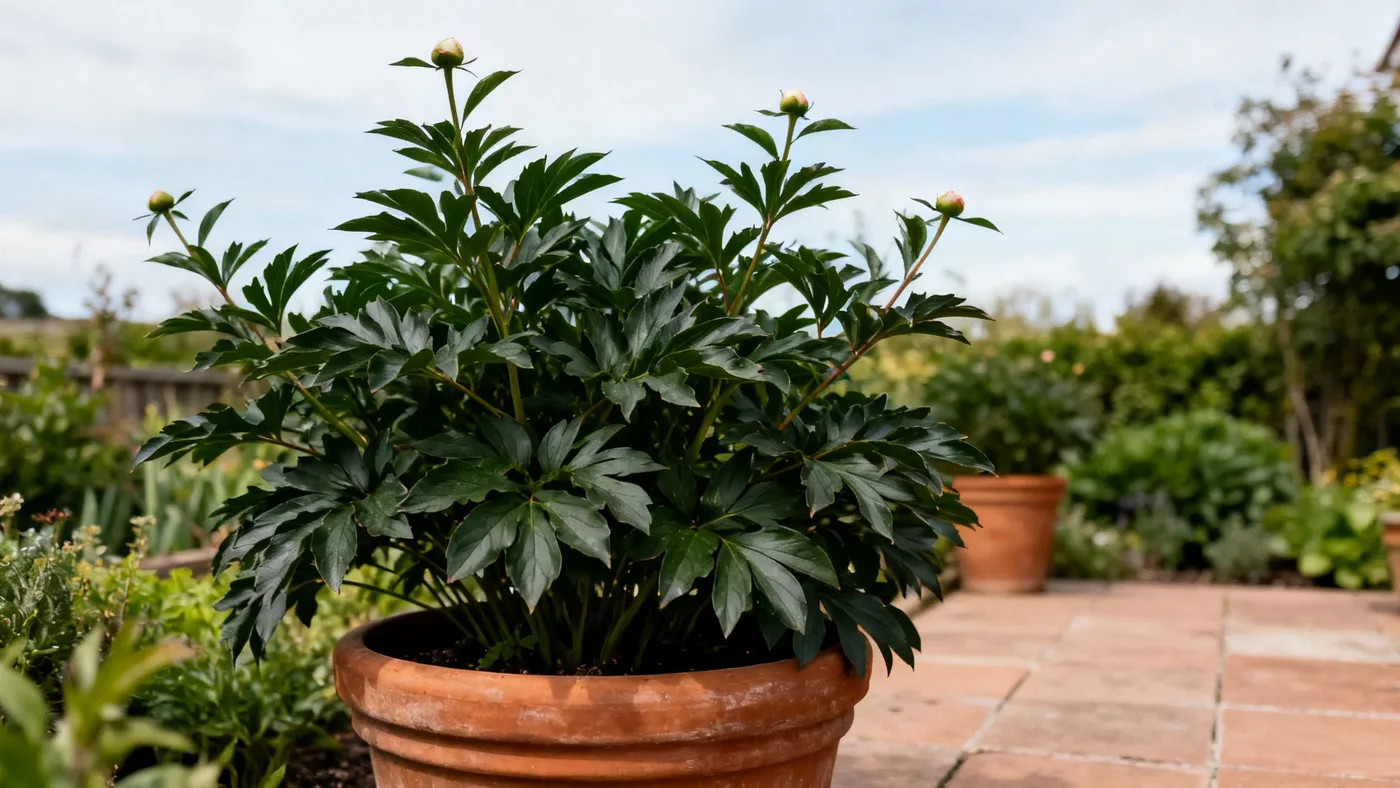
Duchesse de Nemours Peony Buying Guide: Roots, Pots and Size
Duchesse de Nemours Peony is one of the most reliable herbaceous peonies you can bring home. The creamy white, double-flowered blooms with a pale yellow flushed center and strong sweet fragrance make it a classic choice for borders and cutting gardens. When you buy, though, the choices multiply fast: bare-root or potted? What size? How much should you spend? This guide walks you through every option so you end up with a healthy plant ready to bloom for decades.
What to Look For: Quality Indicators
Whether you are shopping bare-root or in a pot, the same rule applies: inspect the roots first. Healthy Duchesse de Nemours peony roots are firm, pale to white or tan, and at least the thickness of a pencil. Soft, mushy, or blackened roots signal rot. If a bare-root division is wrapped, unwrap it before buying to check for hidden damage.
The crown (the woody base where shoots emerge) should have visible growth eyes, small reddish or pinkish buds on the surface. For bare-root peonies, count the eyes: a 3-eye division is the market standard and gives you reliable first-year growth. Divisions with only one or two eyes take longer to establish and are best left in nursery beds, not sold retail at full price.
Look for the planting depth marker on bare-root peonies. A light line on the stem shows where the crown sat in the ground. This depth matters: eyes should be no more than 1 to 2 inches below the soil surface when planted. Any deeper, and the plant may not bloom for years, even with perfect care.
For potted peonies, gently tease back the top of the soil to see the crown position. It should sit right at soil level or slightly above, never buried. If the whole pot is moss or coir with no visible soil line, the plant may have been potted too deep.
Bare-Root vs. Potted: The Real Differences
The choice between bare-root and potted hinges on timing, price, and your climate.
Bare-Root Peonies
Bare-root divisions ship in fall, typically September through November, which is the ideal planting window. Peonies are dormant, the roots are exposed so you can inspect them fully, and you avoid the shock of a long pot-to-ground transition. Cost is lower, too: expect to pay $8 to $20 for a quality 3-eye division, compared to $25 to $50 or more for a potted plant.
The trade-off is that bare-root divisions need immediate planting. If you live in zones 3 to 5, fall planting gives roots time to settle before winter. In zones 6 to 8, fall and early winter both work. You cannot simply leave a bare-root peony on a shelf for weeks.
Potted Peonies
Container-grown peonies can be planted in spring or fall, so you have flexibility. You can see what you are buying, including foliage and overall vigor. Spring purchase lets you assess the plant in leaf before committing. Container plants are usually sold as quart, #1 (1-gallon), or #3 (3-gallon) sizes.
The downside: potted peonies cost more, they dry out during shipping, and a peony in a pot for six months or a year has often been in the same soil and may be root-bound. If you buy a large container plant late in the season, you are paying premium prices for a plant you may not be able to establish well before winter dormancy.
Size Guide: What You Buy vs. What You Get
Duchesse de Nemours grows to a mature height of 26 to 36 inches and spreads 24 to 36 inches wide. Full mature size is reached in 3 to 4 years. This is important: you are not buying a full-size peony; you are buying a plant that will expand over time.
A 3-eye bare-root division typically puts up three to five stems its first spring, reaching 12 to 18 inches, with light or no bloom. Year two adds more stems and more flowers. By year 3 to 4, you have a full specimen with 6 to 10+ stems and heavy floral production.
Quart or small #1 container peonies are starter sizes, usually 1 to 2 years old, similar in maturity to a first-year bare-root. #3 container peonies are established plants, often 2 to 3 years old, and will fill space faster. If you need immediate presence, a #3 is worth the extra cost. If you can wait and space is tight, start small.
Price Point Breakdown
Bare-root divisions (fall, 3-eye) run $8 to $20. This is the entry point and best value. You get a proven propagation with minimal cost and maximum transparency on root quality. Nurseries and online bare-root specialists offer the widest selection at this price.
Quart or small #1 container peonies cost $18 to $40. These are young plants with modest pot size. Ideal if you want to plant spring through fall and do not mind waiting 2 to 3 years for full size.
#3 or large container peonies run $40 to $70 or more. These are established plants that will contribute more visual impact in year one and deliver bloom sooner. Price reflects the grower's investment in 2 to 3 years of cultivation. Specialty nurseries with limited stock often command the higher end.
Where to Buy Duchesse de Nemours Peony
Online Bare-Root Specialists
Bare-root peony growers and perennial specialists ship high-quality divisions nationally in fall. These vendors know peonies deeply and offer bare-root at the lowest cost. Look for nurseries that show root photos, list eye count, and guarantee dormancy standards.
Local and Regional Nurseries
Spring through fall, local nurseries stock potted peonies. The advantage: you walk in, inspect roots and foliage, and take the plant home the same day with zero shipping risk. Staff often know local growing conditions and can advise on spacing and care. Container stock varies by region and season.
Big Box Garden Centers
Big box retailers carry potted peonies in spring and early fall. Prices are usually competitive, but stock is often limited to popular varieties and common sizes (quart, #1). Root quality can vary widely. Inspect pots carefully and avoid plants with circled roots or obvious neglect.
Mail-Order Catalogs
Established mail-order nurseries offer both bare-root and containerized peonies, with detailed descriptions and honest photos. Shipping cost is higher, but selection and plant quality tend to be excellent. Many include care instructions specific to Duchesse de Nemours.
Red Flags to Avoid
Do not buy bare-root peonies with soft, translucent, or black roots. These indicate rot and will not establish. Avoid any bare-root division with fewer than two eyes; it may take 3+ years to produce a substantial plant, if it survives at all.
For potted peonies, skip any with roots circling the bottom of the pot or bursting through drainage holes. This means the plant is root-bound and stressed. Also avoid pots where the crown is buried deeply in soil; shallow planting is worth the effort to correct at purchase, but you should never pay full price for a badly potted plant.
Do not buy any peony with visible powdery mildew (white coating on foliage), yellowing leaves out of season, or sticky insects. These pests and diseases are hard to reverse once they travel to your garden. Healthy foliage should be dark green.
Extreme caution on "multi-colored" or unusual peony listings: Duchesse de Nemours is always creamy white with a pale yellow flushed center. If a seller claims a different bloom color, it is likely mislabeled. Demand a photo of an actual bloom in flower before purchasing.
Quick Reference: Buying Checklist
| Category | What to Check | Bare-Root | Potted |
|---|---|---|---|
| Best Time to Buy | Seasonal availability | Sept.–Nov. (fall dormancy) | Spring or fall; year-round in mild zones |
| Root Check | Firm, pale, pencil-thick minimum | Fully visible; unwrap to inspect | Gently probe soil; should not encircle pot |
| Eyes (Growth Buds) | Reddish/pinkish bumps on crown | 3 or more for reliable first-year growth | At least 2; count if visible at soil line |
| Crown Depth | Eyes 1–2 inches below final soil surface | Check planting depth marker on stem | Crown should sit at soil level, not buried |
| Container Size | Minimum 18–24 inches diameter for potted | N/A | Quart, #1, or #3; larger = faster size |
| Typical Price | What you should expect | $8–$20 per 3-eye division | $18–$40 (quart/#1); $40–$70+ (#3) |
| Years to Full Bloom | When it reaches 26–36 inches wide | 3–4 years; light bloom year 1–2 | #1 takes 2–3 years; #3 takes 1–2 years |
| Red Flags | Skip these plants | Soft/black roots, one eye or fewer, no planting marker | Circled roots, buried crown, powdery mildew, wrong bloom color |
After You Buy: Planting and First Year Care
Once you have your Duchesse de Nemours peony home, success depends on proper planting depth and location. Choose full sun (6 or more hours daily), though afternoon shade in hot southern climates is tolerated. Space plants 3 feet apart to allow air circulation and room for mature spread.
Plant bare-root in fall (September through November in zones 3 to 8). Dig a hole deep enough that the crown eyes sit 1 to 2 inches below the final soil surface. Use fertile, humus-rich, well-drained loam. Avoid heavy clay and waterlogged sites.
For potted peonies, correct any deep planting before you install the plant. If the crown was buried in the pot, gently remove soil and re-pot or plant so the eyes sit at the right depth. Water thoroughly after planting and keep soil consistently moist (not soggy) through the first growing season.
Do not expect heavy bloom the first year. A bare-root division may produce a single bloom or none. A potted #1 may offer a few flowers. This is normal and healthy; the plant is investing in roots and crown expansion. By year 3 to 4, you will have the full floral display Duchesse de Nemours is famous for. For detailed care after planting, see our Duchesse de Nemours Peony care guide.