Can You Grow Duchesse de Nemours Peony From Seed?
Every Duchesse de Nemours peony you have ever seen is a piece of one original plant. Growers cut the thick, fleshy roots into sections, each with a few buds, and replant them. The clump in your garden is a clone, and the plant is built to be multiplied that way.
That is why the answer to the title comes in two parts. Yes, you can sow its seed, and some pods may even set. But what comes up will not be Duchesse de Nemours, and you will wait years to find out what it is.
In this article, we'll go through how the plant is built, why seed from a named cultivar cannot match its parent, what to do with seed pods, how long seedlings take to flower, and how division and bare roots get you the real flower.
How a Duchesse de Nemours Peony Builds Itself
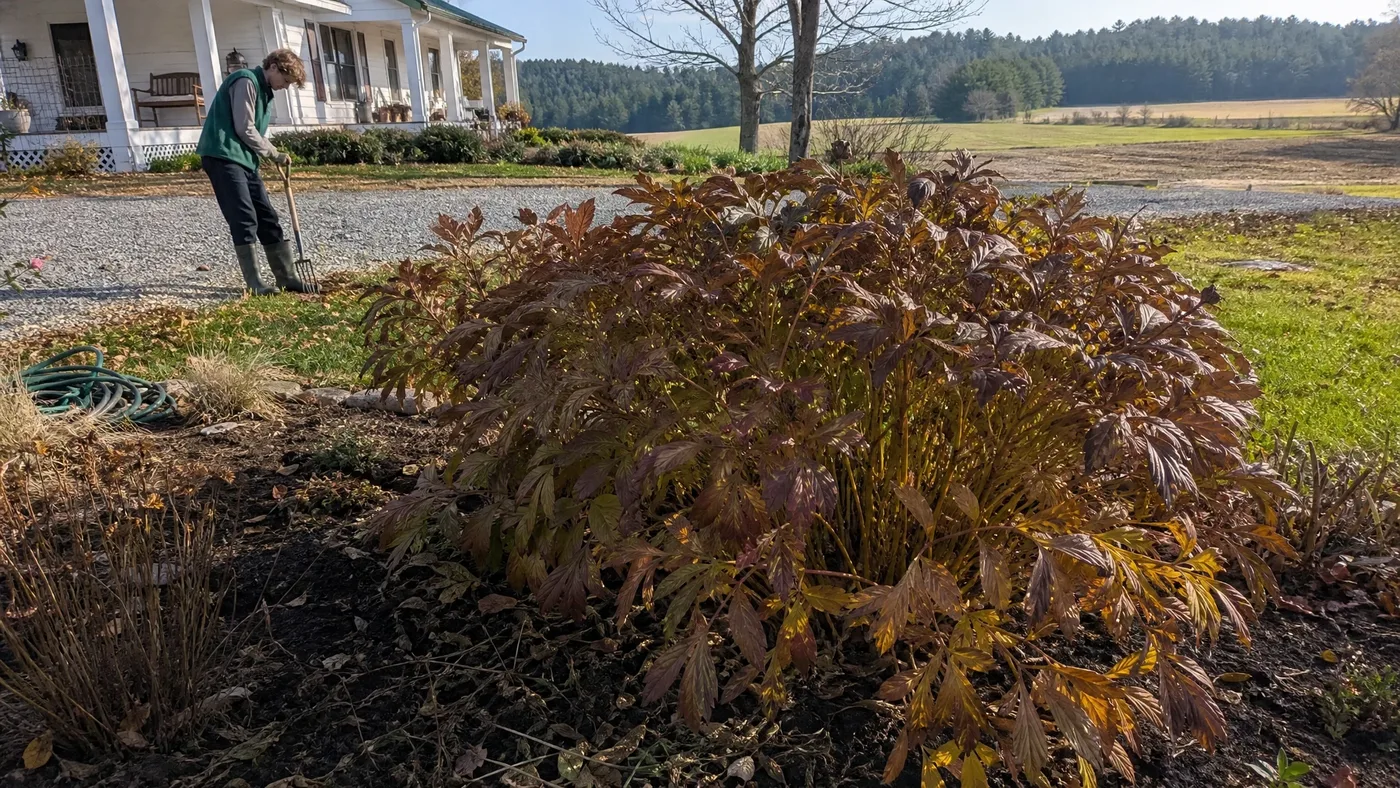
Dig a mature clump in fall and the plant explains itself. Thick, fleshy roots fan out below the crown, and along the top of the crown sit the eyes, the small buds that become next spring's stems. Everything you see in June comes from those two parts, and everything you can do to multiply the plant works on them.
Storage Roots and Eyes
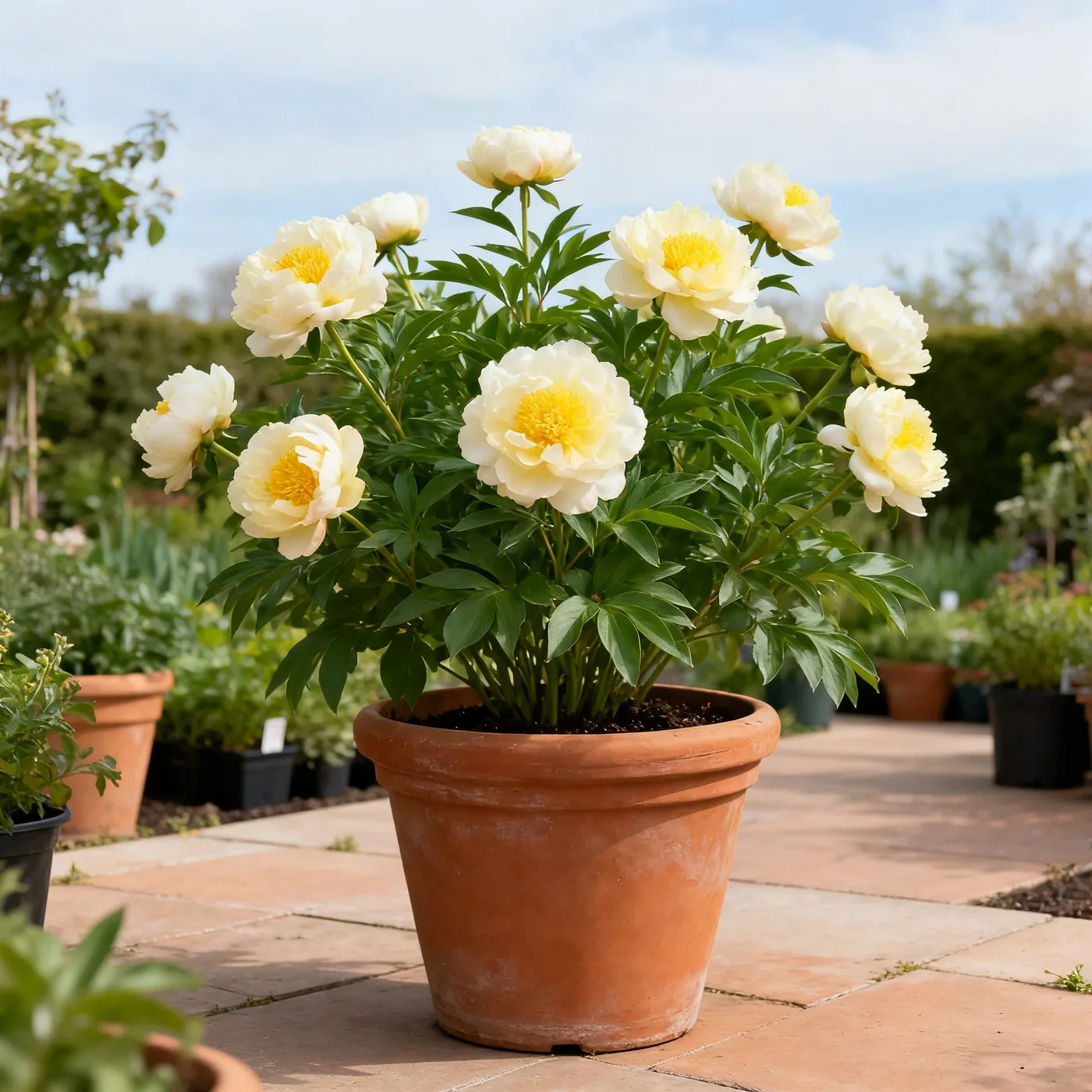
The fleshy roots act as a pantry. They fill with stored energy through the growing season, the stems die back to the ground each winter, and the plant waits underground until spring. Each eye sends up one stem, and each stem carries a flower. The flowers are fragrant, fully double and white, about 6 to 8 inches across.
More eyes means more stems, which is why a division with plenty of eyes and good roots carries the whole plant forward intact.
A Clump That Widens Slowly
Peonies are not fast, and NCSU Extension lists the growth rate of herbaceous peonies as slow. Year by year the crown adds eyes and the clump widens. This cultivar grows up to about 31 inches tall, with a height and spread range of roughly 20 to 39 inches. Our guide to how big Duchesse de Nemours gets covers the spread in detail.
A crowded center, with eyes jostling for room, is the plant telling you it is ready to be split. Spreading by division is the way this plant is meant to reproduce in your garden.
Why Seed From Duchesse de Nemours Peony Will Not Match
Open a seed pod and every seed inside is a new individual. Duchesse de Nemours is a cultivar, one plant multiplied by division, so every clump carries identical genes. Seed does not work that way. Each seed gets half its genes from the plant that bore the pod and half from whatever pollen reached the flower, and both sides carry a mix of traits that the parent's flower never shows.
What Shuffled Genes Look Like
Expect a spread of results. Some seedlings may bloom white, some blush or pink, some single or semi-double, and some with a different scent or a different habit. The fully double white form belongs to one cultivar and does not pass down as a package. Pollen can come from another peony in your yard or a neighbor's, so even two pods on the same stem can differ.
A seedling is a new, unnamed plant. Calling it Duchesse de Nemours would be wrong, however much it resembles the parent. The name belongs to the clone.
Seed Listings Under This Name
Search for Duchesse de Nemours seeds and you will find listings. Treat them with suspicion, because nobody can promise the cultivar from a packet. One of the most common questions we get is whether pods from this plant will give more of the same, and our answer is no.
The usual advice says to save seed from a favorite and you will get more favorites. For a named peony that is backwards. If you want the white double flower you remember, you need a piece of the plant itself.
Seed Pods and What We Do With Them
After the petals drop, look at the center of the stem for green, fleshy pods. Fully double flowers like this one often set few or none, so finding no pods is normal and not a sign of a problem. When pods do form, they swell through summer, split open in late summer or fall, and show dark seeds inside.
Pick Pods or Remove Them
Our default is to deadhead. Clemson Extension advises removing seed heads once flowering is finished so the plant stores more energy for next year's bloom, and we agree. A peony that spends a summer ripening seed has less to put back into its roots.
If you want to experiment, leave one pod on one stem and cut the rest. That keeps the cost to the plant small and still gives you seed to sow.
Harvest and Sow Fresh
Pick the pod when it starts to split and the seeds look dark and glossy. Sow soon and do not let them dry out on a shelf. Peony seed generally wants warm soil first and a cold spell after, so sow outdoors in a prepared bed or a deep pot in fall, label it clearly, and cover it with mesh against mice and squirrels. Exact timing depends on your zone, so check with your local extension service.
Then wait. Peony seed can take a full winter before a shoot appears, and some seedlings do not show above ground until the second spring. Do not dig the bed up out of curiosity, because the roots are working down there long before leaves arrive.
The Slow Road From Seedling to Flower
Plan on years, not seasons. Purdue notes that seed-grown tree peonies usually require six or more years to mature enough to flower. That figure is for tree peonies, but herbaceous seedlings from a double lactiflora are slow as well, so count on a long stretch before the first bloom. A division comes with a head start, and the table shows the difference.
| Route | What you get | Wait for first bloom |
|---|---|---|
| Seed from your plant | A new, unnamed seedling, different from its parent | Years, and you cannot predict how many |
| Division with 1–2 eyes | True Duchesse de Nemours | May be several years |
| Division with 3–5 eyes | True Duchesse de Nemours | Usually within three years of planting |
Why the Wait Stretches
A seedling starts with almost nothing. It has to grow storage roots and build up eyes before it can afford a flower, and with a slow-growing plant that takes time. A division already carries mature roots and buds, so it only has to settle in.
Judge a seedling after a few seasons of blooms, not the first one. Early flowers can look nothing like a mature plant's. If a bought plant is slow to flower, our guide on why a Duchesse de Nemours peony is not blooming covers the usual causes, from shade to planting depth.
Dividing Your Duchesse de Nemours Peony in Fall
Division is how this plant has always been multiplied, and it is the one propagation method that gives you the real flower. You can propagate by division in autumn or early spring. We lean toward fall, when the plant is dormant and the soil is still workable.
When to Lift the Clump
Clemson Extension says to divide or move peonies in late September or October. In colder zones, aim for the earlier end so the cut roots have time to settle before the ground freezes. Choose an established clump with a crowded center, not a young plant that has just started to fill out. Cut the dying stems back to the ground before you dig.
Cutting the Divisions
Dig a wide circle around the clump to save as much root as possible, lift it, and wash the soil off so you can see the eyes. Cut with a clean, sharp knife so that each section has three to five eyes and good roots. Smaller pieces with one or two eyes can take several years to flower.
In our rows, we would take fewer, larger divisions over a pile of small ones. Replant each piece promptly in a sunny spot (full sun to light shade works) and water it in. Our guide to planting Duchesse de Nemours covers depth and spacing, which matter more than anything else for first blooms.
Choosing Bare Roots Instead
If you do not have a clump to split, bare roots are the dependable route. A bare root is a division that someone else has already cut, counted and trimmed for you. It is the same plant you would get from your own garden, with the same fully double white flowers, and no guessing about what the seedlings will do.
What a Good Division Looks Like
Look for firm, plump roots and visible eyes, with no soft spots, mold or shriveling. Aim for roughly three to five eyes. More eyes is a better start, and a single-eye piece is a long wait. Our buying guide for roots, pots and size goes through what to check on arrival.
Planting for the Long Run
Plant bare roots in fall, the same window as division. This cultivar grows in zones 3 to 8 and does best in zones 5 to 7, according to NCSU Extension. Give it a spot that gets full sun, with light shade acceptable. After that, it asks little. The care guide covers the routine.
Once it is in, leave it alone. A peony that is not moved can bloom for decades.
Planting Seed Anyway: Duchesse de Nemours Peony Surprises
If you are curious, go ahead and sow seed. Think of it as an experiment, not a plan. You will get new plants, some probably pretty, none of them Duchesse de Nemours, and a long wait to see what each one is. Treat the seedlings as a hobby bed in a corner, label them honestly, and enjoy whatever shows up.
Duchesse de Nemours Peony
Nursery-grown Duchesse de Nemours Peony in sizes from 2 Gallon, shipped to your door.
From $69.95
Shop Now →We give Duchesse de Nemours full sun and well-drained soil on our farms, and that is how every peony we sell is raised. We are a small business of growers who raise every plant we sell, and we offer only top-quality plants. If you would rather skip the long wait to see what a seedling turns out to be, start with one of ours and enjoy the true Duchesse de Nemours.