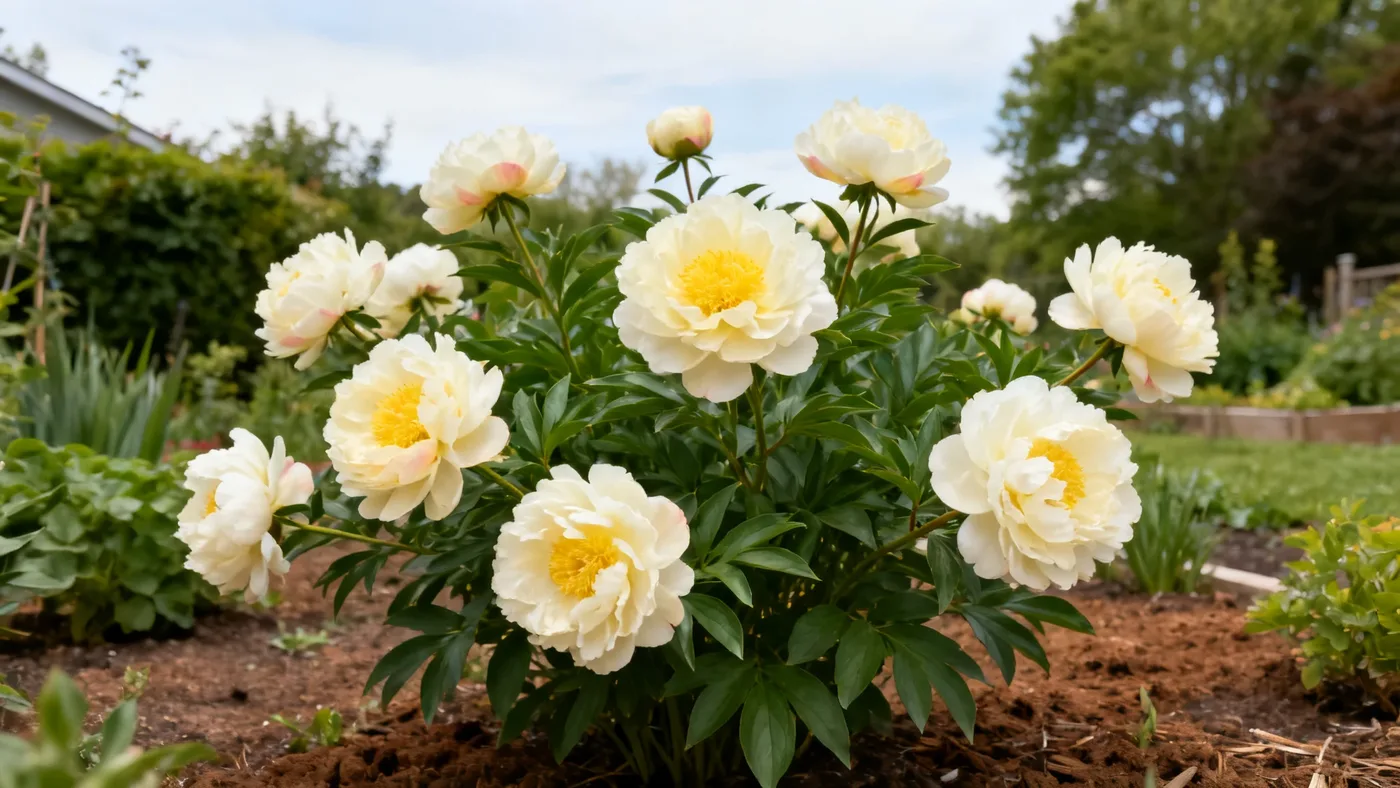
Duchesse de Nemours Peony Not Blooming? Causes and Fixes
Your Duchesse de Nemours Peony is a strong plant. It can live for 50 years or more with minimal care. Yet many gardeners end up frustrated when their peony fails to produce its signature creamy white blooms with pale yellow flushed centers. The good news: most non-blooming peonies can be fixed. This guide walks through the main reasons why your Duchesse de Nemours might not be flowering, and exactly how to fix each one.
Why Duchesse de Nemours Peony Fails to Bloom
Duchesse de Nemours Peony typically blooms in early to mid-season, usually in May, though timing varies by region and USDA zone. If yours is not flowering, one of four conditions is almost always at fault: planting depth, light, fertilizer imbalance, or age. Less commonly, bud blast from cold snaps or humidity can thin the floral show. Most fixes are straightforward once you identify the culprit.
The encouraging part: Duchesse de Nemours is not fussy. Most gardeners encounter the same handful of obstacles, and each one has a clear solution. You do not need special knowledge or tools. You need to know what to look for and when to act.
Planting Too Deep is the #1 Culprit
The most frequent reason Duchesse de Nemours Peony refuses to bloom is planting too deep. Peony eyes (the small knobby buds on the root crown) must sit no more than 1 to 2 inches below the soil surface. Plant them deeper, and they may not produce flower buds for years, if ever.
How deep is too deep? If you buried the eyes 3 inches or more, that root crown is struggling to survive. It's working so hard just to push foliage through compacted soil that it cannot afford to make flowers. A peony planted 4 or 5 inches deep may produce healthy green foliage alone for many seasons before it finally decides to flower, if it ever does.
Check your planting depth now. Gently excavate around the base of your plant with a hand spade or cultivator. You should see the crown (where roots meet foliage) sitting close to the surface. The eyes look like small, hard bumps on the crown. If soil is piled 3 inches or more over those eyes, depth is your problem.
Too Little Light Stops Flower Formation
Duchesse de Nemours Peony needs at least 6 hours of direct sun each day to flower reliably. Plants growing in partial shade, dappled light under trees, or receiving only 3 to 4 hours of sun may bloom sparsely or not at all, even if everything else is correct.
The plant will still grow foliage. You'll see healthy dark green, deeply lobed compound leaves expanding year after year. But without sufficient light energy, the plant prioritizes vegetative growth over reproduction. Flower buds simply don't form at all.
If your peony is shaded by tall trees, a fence, or a building on the south or west side, light is your structural problem. Either transplant it to a sunnier spot in fall, or accept reduced bloom and prune nearby shrubs and tree branches to open up the canopy. Note: Duchesse de Nemours can tolerate light afternoon shade in hot southern climates (USDA zones 7 to 8), but even there, at least 6 hours of morning or midday sun is essential.
Wrong Fertilizer Promotes Leaves, Not Flowers
High-nitrogen fertilizer is a silent killer of peony blooms. Nitrogen drives foliage growth. Apply too much nitrogen, and your Duchesse de Nemours will reward you with lush, vigorous leaves and almost no flowers.
Duchesse de Nemours responds best to a light application of low-nitrogen, phosphorus-rich fertilizer such as bone meal or a dedicated bulb fertilizer. Apply this in early spring as new shoots emerge from the ground. Skip heavy nitrogen feeds entirely. If you have been using an all-purpose lawn fertilizer with high nitrogen (like 10-5-5 or 15-5-5), switch immediately to something lighter or skip feeding altogether.
Rule of thumb: phosphorus promotes blooms, nitrogen promotes leaves. Check your fertilizer bag. If the first number (nitrogen) is higher than 10, use something lighter or use nothing at all. Peonies are not heavy feeders. A light spring application of bone meal every other year is often all the nutrition they need. Overfeeding is far more common than underfeeding, especially in established, mature plants.
Bud Blast: Cold Snaps and Humidity Damage
Bud blast occurs when flower buds form correctly, then fail to open or rot before blooming. You see buds swelling in late April or early May, only to watch them shrivel, turn brown, or develop gray mold before they flower. Cold snaps in late spring are the primary trigger, but high humidity and poor air circulation also contribute.
Unfortunately, you cannot prevent cold weather. But you can reduce the risk of bud rot by improving air circulation around the plant. Space peonies at least 3 feet apart from other plants. Prune out crowded foliage in early summer to open up the center of the plant and let air flow through. If your garden is humid or you garden in a frost-prone zone (zones 3 to 4), expect occasional bud blast as a normal part of peony life. Most years your Duchesse de Nemours will bloom beautifully anyway.
Young Plants Have Not Yet Matured
A peony planted in fall may produce a light bloom within 1 to 2 years. Full floral display typically appears by year 3 to 4 after planting. If your Duchesse de Nemours is younger than 2 years in the ground, give it time. It is still establishing its root system and building energy reserves.
This is not a problem to fix. It is simply plant biology. Peonies are long-lived plants that improve with age. A 3-year-old Duchesse de Nemours will flower more reliably, more abundantly, and with larger blooms than a 1-year-old one. Patience here is part of gardening with peonies.
How to Fix a Duchesse de Nemours Peony That Won't Bloom
Materials You Will Need
- Hand spade or garden shovel
- Hand cultivator or digging fork
- Bone meal or phosphorus-rich bulb fertilizer
- Mulch (aged compost or shredded bark)
- Garden pruners or hedge shears
- Measuring tape (to verify depth and spacing)
Diagnosis and Correction Steps
Start with the most likely culprit first. Work through these steps in order during the dormant season, fall or early spring.
- Check planting depth immediately (any time of year). Excavate gently around the base with a hand spade. If the crown is buried more than 2 inches deep, mark it for fall correction. Do not dig up the entire plant in spring or summer; wait until late fall after frost has killed foliage back. At that time, carefully lift the whole root ball and reposition it shallower.
- Assess light next (spring or early summer). Stand in your garden at 9 AM, noon, and 3 PM on a clear day. Use a measuring tape if needed. Count how many hours your peony receives direct sun without tree or building shade. If it gets fewer than 6 hours of direct sun, light is a major problem. Plan to move it in fall, or prune trees and shrubs nearby to open up the canopy above.
- Review your fertilizer history (any time). Check the bags or containers of any fertilizer you have applied in the past 2 years. If you used high-nitrogen lawn fertilizer (10-5-5 or higher nitrogen), stop immediately. Switch to bone meal or a bulb fertilizer (phosphorus-rich, low nitrogen) applied lightly in early spring only, once per year or every other year.
- Deadhead and improve air flow (late spring through summer). After your peony blooms, even if bloom is light, remove spent flower buds by cutting them off just below the base of the flower head. This redirects energy to root reserves for next year. In early summer, look inside the plant. Remove any dead, diseased, or crowded stems from the center. Your goal is to see daylight through the base of the plant, creating air flow that reduces humidity and bud rot risk.
- Correct planting depth in fall (September through November). If the crown is buried too deep, wait until after frost kills foliage back completely (you'll see black, mushy leaves). Using a hand spade, carefully excavate around the plant. Loosen soil under and around the entire root ball. Gently lift the plant. Reposition it so the eyes sit exactly 1 to 2 inches below the final soil surface, not deeper. Backfill with amended soil, water thoroughly, and apply 2 inches of mulch around the base, keeping mulch several inches away from the crown itself to prevent rot. Do not move the plant again; peonies benefit from staying in one place for decades.
- Be patient with young plants (1 to 2 years old). If your peony is fewer than 3 years in the ground and was planted at the correct depth in sun with appropriate fertilizer, simply wait. Bloom will come. Most Duchesse de Nemours plants reach full floral maturity by year 4, producing multiple large double blooms per stem.
Preventive Care for Consistent Blooms
- After each bloom season ends, deadhead spent flowers throughout late spring and early summer to redirect energy to root reserves.
- In late fall after frost kills foliage black, cut all growth back to the ground level using hedge shears or a pruner. Remove any diseased or rotted stems completely.
- Apply 2 inches of aged mulch (compost or shredded bark) around the base in fall. Keep mulch 3 to 4 inches away from the crown to prevent rot and pest issues.
- Water consistently during the growing season if rainfall is light. Duchesse de Nemours blooms best without prolonged dry spells, though it is moderately drought-tolerant once established.
- Space plants 3 feet apart and thin any crowded or overlapping growth to maintain air circulation and prevent bud blast.
- Verify your peony is appropriate for your USDA zone. Duchesse de Nemours grows in zones 3 to 8. Outside these zones, bloom may be unreliable.
Expected Results and Timeline
If you corrected planting depth in fall, expect to see robust bud formation in spring two seasons later (the second spring after correction). Corrections take time because the plant needs a full growing season to heal and reallocate its energy.
If you increased light by transplanting or pruning overhead trees, or switched to phosphorus-rich fertilizer, watch for improved bud formation the following spring. Many gardeners see noticeable results within one season.
If your peony is young (1 to 2 years in the ground) and planted correctly, expect increasingly generous bloom by the third or fourth year without any intervention beyond consistent watering and light spring fertilizing.
For more guidance on daily peony care year-round, see our complete Duchesse de Nemours Peony care guide. To understand when Duchesse de Nemours typically blooms in your region and what to expect from the flower, check our bloom time and flower color guide.
Quick Reference: Troubleshooting Duchesse de Nemours Peony Blooming Problems
| Problem | Most Likely Cause | Action | Expected Timeline |
|---|---|---|---|
| No flowers, only leaves | Planted too deep (eyes buried 3+ inches) | Reposition crown in late fall so eyes sit 1 to 2 inches below surface | 2nd spring after correction |
| Light or sparse bloom, foliage grows well | Less than 6 hours direct sun daily | Transplant to full sun in fall, or prune trees above to increase light hours | Following spring after move |
| No or few blooms, vigorous green growth | High-nitrogen fertilizer applied | Stop nitrogen fertilizer; use bone meal or bulb fertilizer in early spring only | Following spring |
| Buds form but shrivel, brown, or rot | Cold snap or high humidity (bud blast) | Improve air circulation by spacing plants 3 feet apart and thinning crowded stems; accept occasional crop loss | Ongoing; next season usually better |
| Plant is 1 to 2 years old, minimal bloom | Plant is still establishing roots (normal) | None required; continue consistent care with watering and deadheading | Full bloom by year 3 to 4 |
| Consistent bloom, then suddenly stops | Disease, pest, or soil drainage problem | Check for pest/disease damage; verify soil still drains well; consider soil amendment if compacted | 1 growing season |