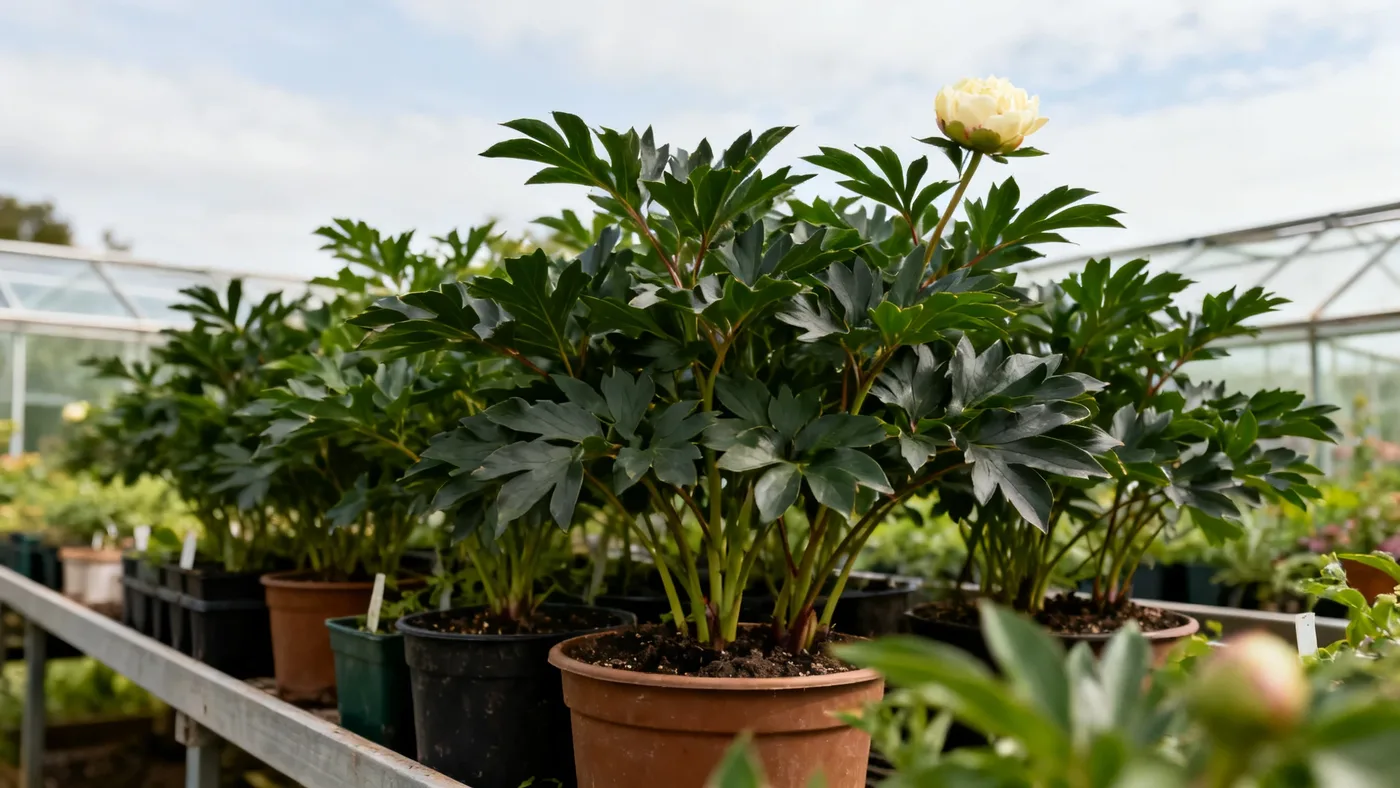
How Big Does Duchesse de Nemours Peony Get? Size and Spread
Knowing the mature size of Duchesse de Nemours Peony helps you plan garden placement, spacing, and long-term care. This beloved cultivar grows to a predictable, manageable size that works well in mixed borders, foundation plantings, and cutting gardens. Here are the answers to the most common questions about how big this peony gets and what to expect as it matures.
Mature Size and Spread
What is the mature height of Duchesse de Nemours Peony?
Duchesse de Nemours Peony typically reaches 26 to 36 inches (roughly 2 to 3 feet) in height at maturity. The exact height depends on your local growing conditions, soil quality, sun exposure, and climate zone. Even within this range, individual plants may vary slightly based on water availability and soil fertility during the growing season.
How wide does Duchesse de Nemours Peony spread?
Mature plants spread 24 to 36 inches across, creating a full, rounded mound of foliage and blooms. This width is roughly comparable to the plant's height, giving the peony a balanced, compact form that fits naturally into most perennial borders. The spread continues to develop over the first 3 to 4 years as the root system establishes.
Are all peonies the same size?
No, different peony cultivars vary widely in height and width. Some cultivars grow only 18 inches tall, while others reach 4 feet or more. Duchesse de Nemours Peony is considered a mid-sized cultivar within the herbaceous peony group, making it versatile for layering in garden beds without overwhelming shorter plants or blocking views of taller specimens behind it.
Does Duchesse de Nemours Peony get bigger with age after it reaches full maturity?
No, once your peony reaches full mature size around year 3 to 4, it remains remarkably consistent year to year. The plant persists indefinitely at the same size with minimal change, which makes peonies excellent for reliable garden design. This stability also means you can safely plan spacing and companion plantings with confidence.
What affects the final size of Duchesse de Nemours Peony?
Soil quality, moisture consistency, sunlight hours, and climate zone all influence the final height and spread of this cultivar. Plants in fertile, humus-rich, well-drained loam and full sun typically achieve the larger end of the size range, while those in less-than-ideal conditions may mature at the smaller end. Consistent watering and proper site selection help maximize growth potential.
Growth Rate and Timeline
How long does it take for Duchesse de Nemours Peony to reach full size?
Duchesse de Nemours Peony reaches its full mature size in about 3 to 4 years after planting. This moderate growth rate is typical for herbaceous peonies and reflects the plant's gradual establishment of a strong root system. Most of the size increase happens in years 2 and 3, with the plant approaching maturity by the end of year 3.
How long after planting will I see the first bloom?
You may see flowers 1 to 2 years after fall planting, though these first blooms are typically light or sparse. The full, spectacular floral display that Duchesse de Nemours is famous for usually appears by year 3 or 4 as the plant reaches maturity. This delay is normal and reflects the peony's energy investment in root development.
Does Duchesse de Nemours Peony grow slowly?
Yes, this cultivar has a moderate growth rate, which is standard for herbaceous peonies. Moderate growth means the plant steadily expands each season without explosive, rank growth. This measured pace helps ensure strong root establishment and a long, productive life, often 50 to 100 years or more with minimal care.
What is the growth pattern year by year?
Year 1 focuses on root establishment, with modest above-ground growth; the plant may be only 12 to 18 inches tall. Year 2 typically brings noticeable expansion in height and width, often doubling the previous year's size. Years 3 and 4 see the peony approach and reach its mature height of 26 to 36 inches, with full foliage density and blooming capacity achieved by year 4.
Will my peony double in size each year?
Growth is not uniform or exponential; the plant grows more aggressively in years 2 and 3 and then levels off. Doubling each year is unlikely and would indicate an atypically large cultivar or exceptional growing conditions. Most gardeners see the most noticeable expansion between year 1 and year 3, followed by stability.
Spacing and Garden Placement
How far apart should I plant Duchesse de Nemours Peonies?
Space plants 3 feet apart center to center to allow room for mature spread and air circulation. This spacing accommodates the 24 to 36 inch width at maturity and prevents overcrowding as neighboring plants grow. Proper spacing also reduces disease pressure by improving air flow around the foliage, which is especially important in humid climates.
Can I plant Duchesse de Nemours Peony in a small garden or container?
In-ground planting is generally preferred because peonies perform and overwinter better when planted directly in the soil. Container growing is possible using large containers at least 18 to 24 inches in diameter, though it is less common for peonies than for other perennials. The restricted root space in containers may limit the plant's full size potential and makes winter care more involved.
What space do I need to plan for around each plant?
Plan a 3-foot circle around the center of each plant to account for mature spread and movement around the plant for deadheading and maintenance. This footprint prevents the peony from crowding nearby plants and ensures you can easily access the foliage in fall when it's time to cut back. The 3-foot spacing also simplifies calculating how many plants fit into a given bed area.
How many Duchesse de Nemours Peonies fit in a 4x8 foot garden bed?
With 3-foot spacing, you can fit approximately 3 to 4 plants in a standard 4x8 foot bed, depending on layout. A row arrangement down the middle of the bed with 3-foot spacing allows 2 plants with room to spare, while a staggered placement might accommodate 3 to 4. Spacing should never be tightened to fit more plants, as this will result in crowding once the plants reach maturity.
Regional Variations
Does Duchesse de Nemours Peony size vary by climate zone?
The cultivar is hardy in USDA zones 3 through 8, and size can vary somewhat across this range due to growing season length and summer heat. In northern zones with shorter growing seasons, plants may mature slightly smaller, while southern gardeners with longer seasons may see plants reach the upper end of the size range. Soil type and consistent moisture often matter more than zone alone in determining final size.
Will my peony be smaller in a cooler zone?
Plants in cooler zones like zone 3 or 4 may grow slightly more compact than those in zone 6 or 7, but the difference is usually modest. The peony still reaches its cultivar-typical size of 26 to 36 inches; it simply takes time to get there. Cooler-zone gardeners should allow the full 3 to 4 years for the plant to mature without assuming slower growth means a permanently smaller plant.
What growing conditions maximize the size of Duchesse de Nemours Peony?
Full sun (6 or more hours daily), fertile and humus-rich soil, and consistent moisture without waterlogging all support the largest, most vigorous growth. Adding bone meal or a phosphorus-rich fertilizer in early spring as new shoots emerge supports strong development. Avoiding stress from prolonged drought or shade helps ensure the plant reaches the full 26 to 36 inch height range.
Long-Term Growth and Lifespan
How long will my Duchesse de Nemours Peony live?
This cultivar is long-lived, often persisting 50 to 100 years or more with minimal care once established. The peony becomes increasingly productive with age, with larger root systems supporting more robust blooms as decades pass. Many Duchesse de Nemours peonies planted by previous homeowners continue to bloom beautifully in established gardens.
Does the plant stay the same size for decades?
Yes, once the peony reaches maturity around year 3 to 4, the height and width remain essentially stable for the life of the plant. The plant does not need periodic division or drastic pruning to manage size, which contributes to its low-maintenance reputation. This consistency is one reason peonies are so useful for long-term garden planning.
Do mature peonies need division to keep them healthy?
Division is optional; peonies thrive for decades without splitting. Many gardeners divide peonies in fall only if they want to propagate new plants or revitalize an old clump that has declined. Unlike many perennials that require periodic division for vigor, Duchesse de Nemours Peony is content to remain undivided indefinitely.
How do I know if my peony is growing properly for its age?
By year 2, the plant should be visibly taller than at planting; by year 3 to 4, it should approach or reach the 26 to 36 inch height range. If your plant is significantly smaller than these benchmarks after 3 years, check sun exposure (6 plus hours daily is essential), soil quality, and moisture consistency. Adding compost to the root zone and ensuring the plant is not planted too deep (the crown eyes should be no more than 1 to 2 inches below the surface) can support better growth.
Quick Reference: Size and Growth Timeline
| Growth Milestone | Typical Timing | Expected Size |
|---|---|---|
| Planting (bare-root or container) | Fall or spring | Variable (nursery-supplied) |
| Year 1 growth | First season after planting | 12-18 inches tall |
| Year 2 expansion | Second growing season | 18-24 inches tall, noticeable width |
| Year 3 approach to maturity | Third growing season | 22-30 inches tall, fuller spread |
| Full maturity and flowering | Year 3-4 | 26-36 inches tall, 24-36 inches wide |
| Ongoing stability | Year 5 onward | Consistent 26-36 in height, 24-36 in width |
| Lifespan expectation | Long-lived perennial | 50-100 years with minimal care |
Size Checklist for Garden Planning
- Mature height: 26 to 36 inches
- Mature width: 24 to 36 inches
- Spacing required: 3 feet apart
- Time to full size: 3 to 4 years
- Growth rate: Moderate and steady
- Size stability after maturity: Yes, minimal year-to-year change
- Container suitability: Possible but not ideal; in-ground is preferred
- Lifespan: 50 to 100 years or more
- Optimal sun: 6 plus hours daily
- Optimal soil: Fertile, humus-rich, well-drained loam
For more detailed care instructions and growing tips, see our complete care guide, which covers planting depth, fertilizing, pruning, and troubleshooting common problems.