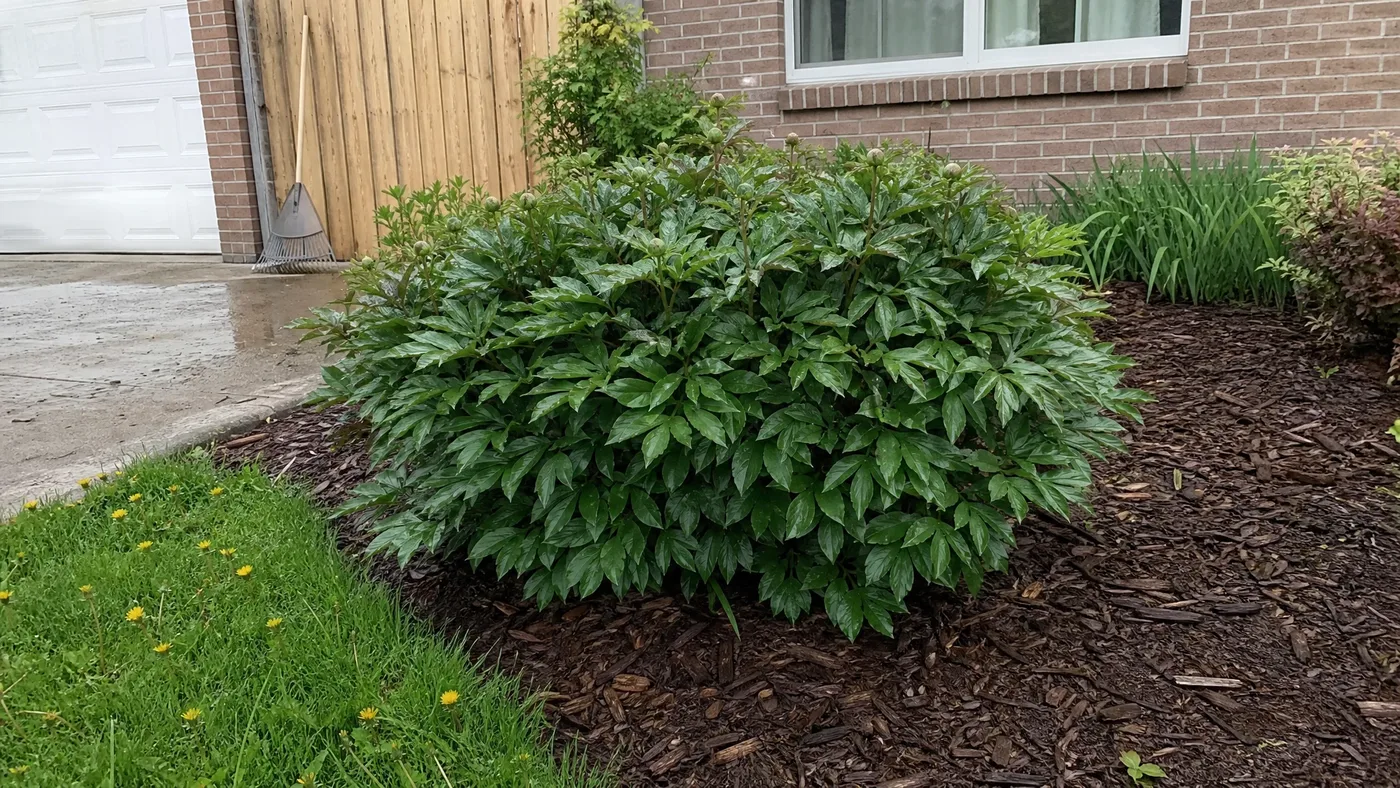
The History and Origin of Duchesse de Nemours Peony
You are standing over a clump of Duchesse de Nemours in late May, one bloom open and the rest fat with color. A neighbor leans over the fence and says it was bred for a French princess in 1856 and has never been beaten. It is a good story. It is also the kind of thing everyone repeats and almost nobody checks.
We checked what we could. Some of the story holds up well, some of it is a reasonable guess, and some of it is decoration.
Below, you'll find out all about the paper trail behind this peony, including the 1856 date, the name, the breeder credit, the "unbeaten white" claim, and what all of it means for planting and buying a true plant today.
What the 1856 Catalog Really Tells Us
The date everyone repeats is 1856, and it is a good date to trust, within limits. Duchesse de Nemours is recorded as originated in France in 1856, in the lactiflora group, and described as a double, large, early bloom. That is the strongest evidence we can point to.
Note what a listing in a plant register is. It is a record that the plant existed under that name by that year, kept by people who collect such records. It is not a photograph of the day the seedling first flowered.
Introduction Is Not the Same as Breeding
In the nineteenth century, a peony was often sold years after it first bloomed. A raiser might grow a seedling on, watch it, divide it, and only then put it in a catalog. So "1856" most safely means the plant was known and named by then. We cannot tell you the year the seed was sown, and no source we use claims to.
That gap matters because peonies are slow. A seedling can take years to reach flowering size, so a plant that was selling in 1856 was probably started well before it.
What We Would Say Out Loud
Here is the sentence we are comfortable with: Duchesse de Nemours is registered as a French lactiflora from 1856. Anything more precise, such as a month, a catalog page or a particular nursery's first sale, is not in the evidence we have. When a seller prints those details, ask where they came from.
Naming Duchesse de Nemours Peony After a Princess
The name is French and it is a title. "Duchesse de Nemours" means the Duchess of Nemours, and the usual retelling says the peony honors a princess. The title is certain. Which woman it honors is where the stories get ahead of the record.
We have found nothing in our sources that names her. "Named for a princess" is therefore a guess at one person, and a title can be borne by different women over the years. Nurseries often attach a portrait to this peony, and none of that is documented.
The table separates what holds from what is assumed.
| Claim you will hear | What the evidence supports |
|---|---|
| Registered in 1856 | Documented in plant records |
| Raised in France | Documented in plant records |
| Named for a duchess | Supported by the name itself, which is a title |
| Named for one particular princess | Not documented in our sources |
| Given as a royal compliment | Plausible custom, but no record we can cite |
None of this makes the name less pleasant to say. It just means you can enjoy the elegance without repeating a biography nobody has verified.
Is Duchesse de Nemours Peony Really Unbeaten?
"Benchmark white" is the claim that does the most work for this plant, and it is the one with the least hard evidence behind it. No trial we know of ranks white peonies and crowns this one. What exists is reputation, and the reputation has a real basis.
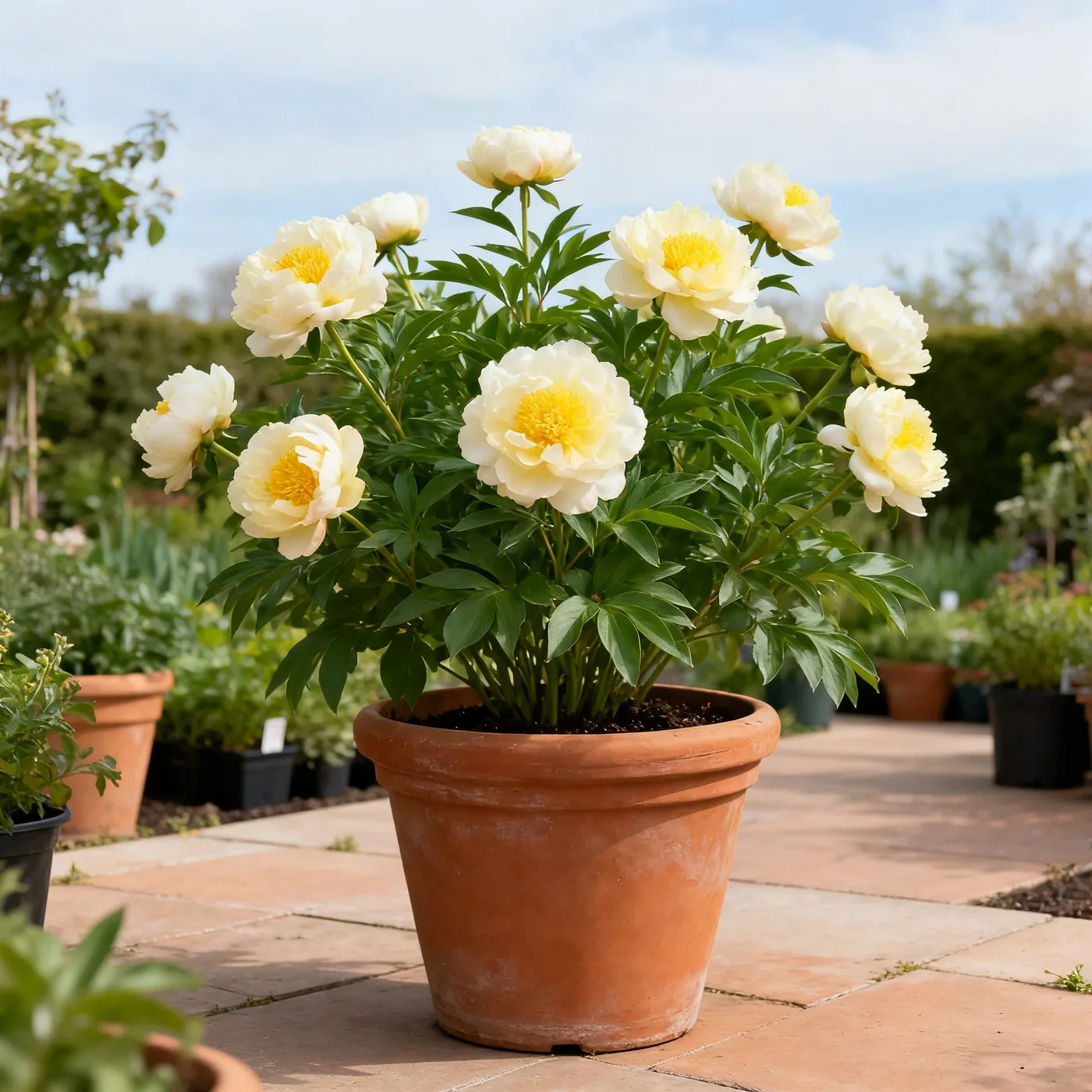
It is dependable and well regarded for profuse production of medium-sized blooms and an excellent garden habit. The flowers are cupped, with white guard petals and a light canary-yellow center deepening to pale green, and notably fragrant. Those are real strengths. They are not a ranking.
Other Whites Exist, and They Are Good
White lactiflora peonies are not scarce, and the one customers most often set beside this plant is Festiva Maxima. We lay out how they differ in our Duchesse de Nemours vs Festiva Maxima comparison. Our position is plain: one is a different flower, not a failed copy of the other, and choosing between them is a matter of form and fragrance.
Our Verdict
Call it a benchmark in the sense that gardeners use it to judge other whites, and you are on firm ground. Call it unbeaten and you have claimed something nobody measured. One of the most common questions we get is whether it is "the best white," and we answer that it is the one we would not want to be without.
Calibert and the French Breeding Claim
The plant is credited to Calot, working in France. You may also run into the name Calibert attached to it in older write-ups, seller descriptions or copied text. The two names are close enough that one can easily become the other as a page is retyped.
We go with Calot, since it is the credit we can actually trace. That gives you Calot, France, 1856. We treat Calibert as an unresolved variant, not a second breeder, and we would not put either spelling on a label with more confidence than the source allows.
Where Sources Disagree
Disagreement about a nineteenth-century raiser is normal. Records were handwritten, catalogs were reprinted with errors, and surnames were spelled however the printer heard them. A mismatch like this tells you about the paper trail, not about the plant in your yard.
What About Parentage?
Some sellers say its age and parentage explain its toughness. We cannot support that. The sources we use give no parentage for this cultivar, so there is nothing to explain anything with. Its toughness is observed in gardens, not inherited from a documented line, and that is also why we do not rank it against modern hybrids on pedigree.
What 150 Years of Survival Proves
A plant still sold after more than 150 years has passed a real test. Gardeners kept dividing it, passing it along and buying it again, which they do not do for peonies that sulk, flop or fail to bloom. That is the best evidence in this whole story, and it needs no embellishment.
It proves less than people claim, though. Survival shows the plant is worth keeping. It does not show that every plant sold under the name is the original, that it resists every disease, or that it will suit your yard.
What Longevity Does Show
Peonies are multiplied by division, so every genuine plant is a piece of the same original plant. That is why a flower today can match an early observer's description: erect, strong stems and a distinctive set of green carpels and stigmas. Consistency across generations is the benefit.
What It Does Not Show
Old does not mean immune. Plenty of long-lived heirlooms get leaf blotch in a wet June, and this one is no exception, as our peony problems guide explains.
Old Roots, Modern Duchesse de Nemours Peony Plantings
An 1856 plant is a good deal for a gardener who thinks in decades. It rewards patience, and it also tells you what to expect. Here is what the heirloom background means in practice.
Expect a Slow Start
NC State lists the growth rate of herbaceous peonies as slow, and a new plant of this cultivar should be treated the same way. Expect a year or two of settling in before it blooms well. Our not-blooming guide covers when waiting is normal and when it is not.
Where It Grows
Herbaceous peonies do best in zones 5–7 but can grow in zones 3–8.
Size and Site
Expect a plant up to about 31 inches tall. Blooms run about 6–8 inches across, and heavy ones may need support. Give it full sun or partial shade and a deep, fertile, humus-rich soil that is moist but well drained.
Our planting guide walks through the steps, and the care guide covers the years after.
Buying Duchesse de Nemours Peony Without Believing Every Label
History sells plants, so history gets embroidered. A fair label says the plant is an old French lactiflora and gives the year. A shaky one gives you a princess's portrait, an exact month, or a breeder name with no source.
The history on a tag matters less than whether the plant is the right one. We see mislabeled peonies often, because roots of different white cultivars look alike in a bag.
Judging the Seller's Story
A short test sorts careful sellers from storytellers.
- Check that the year and country are France, 1856.
- Be wary of specific claims about which royal the name honors, since none is documented in our sources.
- Treat words like "unbeaten" and "the finest white" as opinion, and ask what the seller is comparing against.
- Prefer a seller who tells you what they can verify and says plainly what they cannot.
Confirming You Got the Right Plant
Only a bloom settles it. Look for a cupped, double white flower with a light canary-yellow center fading to pale green, a strong fragrance, and the distinctive green carpels and stigmas. Our bloom time and flower color guide shows what to expect, and the buying guide covers root size and pots.
Trusting the Plant, Questioning the Stories
The history is sturdy where it counts. A French lactiflora registered in 1856, credited to Calot, still grown more than 150 years later for dependable, fragrant white doubles: that we can stand behind. The princess, the exact origin and the claim of being unbeaten are stories, and charming ones, but not facts.
Duchesse de Nemours Peony
Nursery-grown Duchesse de Nemours Peony in sizes from 2 Gallon, shipped to your door.
From $69.95
Shop Now →Before any Duchesse de Nemours leaves our farms, our growers check that the roots are sound and that the plant is the cultivar on the tag. We grow and sell top-quality plants from our own farms, and a peony with this much history should be true to its name. If its record has won you over, start with one of ours.