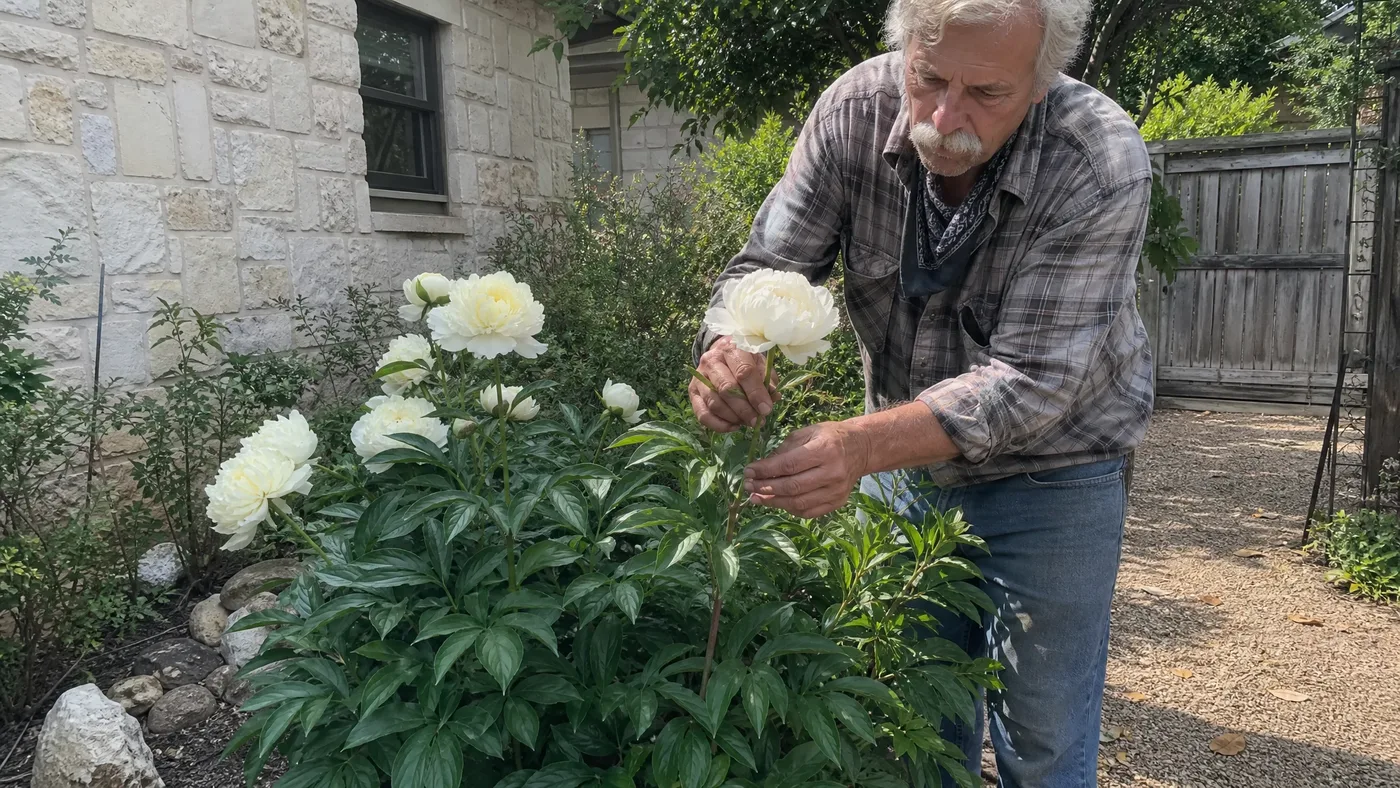
Disbudding Duchesse de Nemours Peony for Bigger Blooms
"I'm holding a stem with one fat bud on top and a crowd of little ones packed underneath it. Which do I keep?" A customer asked us exactly that, and the answer depends on what you want from the stem. If you want one large flower, keep the big bud on top and remove the rest.
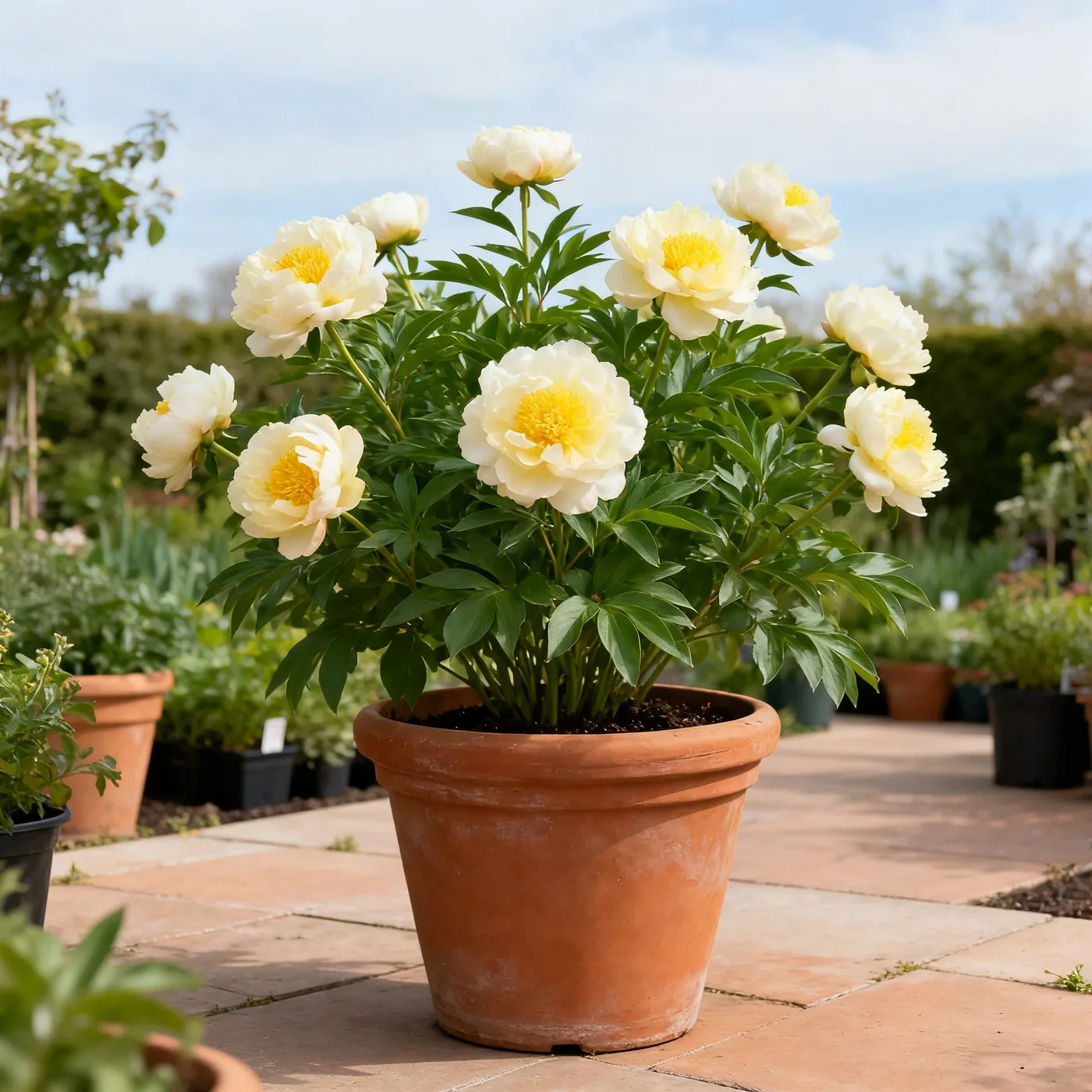
Duchesse de Nemours carries fully double, fragrant white blooms roughly 6–8 inches across. Left alone, a stem splits its effort between the big bud and its neighbors. Pinched, it puts that effort into one flower.
We'll walk you through finding the right bud on each stem and how this cultivar crowds its side buds, then deciding between one giant bloom and more flowers. After that come the pinch itself, fixes for mistakes, and staking the heavier head.
Spot Side Buds on Duchesse de Nemours Peony
Start by identifying the terminal bud, because every later decision depends on it. It sits at the very tip of the stem, and it is the largest and roundest bud on that stem. Every other bud on the stem is a side bud, and side buds are smaller and sit lower down.
Look at stems once they have stretched up and the buds are still tight and green. Hold the stem just below the top and turn it slowly. Side buds grow from the leaf joints below the terminal bud, usually on short stalks, and they can hide behind the foliage until you push a leaf aside.
One of the most common questions we get is how to tell a side bud from a leaf tip. A bud is rounded and firm, and it has overlapping scales like a tiny cone. A leaf tip is flat and pointed, and it unfolds when you look closely.
If every bud on a stem looks about the same size, wait a few days and look again. The terminal bud pulls ahead quickly. If a stem carries a terminal bud and nothing else, there is nothing to remove, and you should leave it alone.
How Duchesse de Nemours Peony Sets Its Buds
Many herbaceous peonies space their side buds along the upper stem. Duchesse de Nemours tends to bunch them in a cluster just under the terminal bud. That cluster is why customers describe a crowd of buds, and it is why this cultivar rewards a careful look before you pinch.
The cluster matters for two reasons. First, the buds hide each other, so you can miss one tucked behind its neighbor. Second, the buds compete for the same flow of energy at the same moment. The terminal bud usually leads, but a stem with a full cluster can open a large flower with a ring of small ones crowding its base.
This is the cultivar's own habit, and it is the reason we give different advice here than for peonies with widely spaced side buds. With scattered buds you can pinch one at a time as you pass. With a cluster, you should work through the whole group on each stem in one visit.
Plant age changes what you see. Peonies grow slowly, as NC State Extension rates herbaceous types, so a young plant may carry few stems with few buds each. Our guide to a peony that won't bloom covers what to check if your plant shows no buds at all.
Choosing One Giant Bloom or More Flowers
Decide this before you touch a bud, because pinching cannot be undone. Both outcomes are good, and each suits a different use. The choice is a trade between flower size and flower count on each stem.
Disbud for One Large Flower
Purdue Extension gives the rule plainly: leave only the large terminal bud on each stem and remove the side buds while they are still small. You get one fuller, heavier flower per stem. This is the choice for cut stems and for a plant you want to show off from a few feet away.
Keep the Spray
If you leave the cluster, the stem opens a main flower and several smaller ones around it. Each is smaller than a disbudded bloom, but the display lasts longer. Bloom time for a peony plant runs about two weeks, so a stem that opens its flowers one after another stretches that window a little.
Some advice says to disbud every stem on the plant. We don't. What we tell customers is to split the plant. Disbud the stems you plan to cut, and let the rest of the stems keep their buds for the border. The plant itself is no worse off either way, and the mix gives you vase flowers and a fuller garden in the same week.
Pinch Side Buds at Pea Size
The time to pinch is when the side buds are about the size of a pea and the terminal bud is clearly bigger. At that stage the side buds snap off cleanly, and the stem has not yet spent much on them. Do not wait until they are marble-sized and the stalks are tough, because late removal has little effect.
Use this order on each stem you decided to disbud:
- Support the stem with one hand just under the terminal bud, so the pinch does not bend it.
- Grip one side bud at its base between thumb and forefinger.
- Snap it sideways, away from the stem, and let it drop.
- Work through the whole cluster the same way, then lift the leaves and check behind them for hidden buds.
- Move to the next stem, and check the plant again after a few days for anything you missed.
Touch only the side buds. Leave the leaves in place, since the plant needs them to feed the one bloom you are keeping. If a stalk is too tough for your fingers, use clean, sharp snips and cut as close to the stem as you can without nicking it.
Do this on a dry morning when stems are firm. A pinched stem leaves a small scar that closes fast on a dry day, and it is easier to see what you are doing in good light.
If a Side Bud Gets Away From You
Most mistakes come from pinching late, missing a bud in the cluster, or removing the wrong one. None of them ruins a stem. Match what you see on the stem to the table below.
| What you see | What to do |
|---|---|
| Side bud is pea-sized and still tight | Remove it now. Cut it with snips if it will not snap, and keep the cut clean. |
| Side bud is showing color | Leave it. Removing it now would only leave a wound, and you can cut it later as a small vase flower. |
| You snapped off the terminal bud by mistake | Pick the largest remaining side bud, keep it as the new lead, and pinch the rest. |
| You missed a whole stem | Decide again. Pinch it late if the buds are still green, or let that stem be your spray stem. |
| You pinched earlier than pea size | No fix is needed. Early pinching is fine as long as you kept the terminal bud. |
Our growers see the same pattern every year: the stems that get away are the ones in the middle of the clump, where leaves hide the cluster. Check those stems first next season, and check them again a few days after your first pass.
Staking a Heavier Duchesse de Nemours Peony Head
A disbudded stem carries all its weight in one large double flower, and a wet double bloom is heavy. Some peonies require staking or caging while in bloom. Plan on it for any stem you disbud, especially after rain.
The plant itself is not tall, at roughly 20–39 inches. That is short enough for a ring or cage but tall enough that a nodding head will lie in the dirt. Our size and spread guide shows how much room a mature clump takes.
Set a Cage Early
Put the ring or cage over the clump in early spring, while shoots are still short, so the foliage grows up through it. Placing a cage after the buds have formed means bending stems and risking the buds you just protected.
Tie Single Stems
If you disbud only a few stems, tie each one loosely to a thin stake with soft twine, just below the head. Keep the tie loose enough that the stem can sway without rubbing. Check the tie after heavy rain.
What Disbudded Duchesse de Nemours Peony Stems Give Back
Expect one large, full white flower at the top of each disbudded stem. The 6–8 inch range is the usual size for this cultivar, and a disbudded stem is your best chance of reaching the upper end of it. The fragrance stays the same, and our scent guide covers what to expect indoors.
Expect fewer flowers on those stems. The stem count stays the same, because disbudding removes buds, not stems. What drops is the number of blooms per stem, which falls to one. The undisturbed stems still give you a spray, so you can compare them side by side.
When you cut, take the stem short. Leave at least two leaves per stem on the plant, since removing leaves hurts the plant while picking flowers does not. Cut from disbudded stems first, and the plant keeps a full set of leaves for next year.
The bloom window is short, so our bloom time guide helps you plan when to pinch. Note that disbudding is not pruning. Cutting back foliage in fall is a separate job, covered in our pruning guide.
Pinch a Few Stems and Compare
With Duchesse de Nemours, the question is one big bloom against a spray, and only your own plant can settle it. Find the terminal bud, pinch the side buds at pea size, and stake the heavier head. Expect a fuller flower on fewer-bloom stems.
Duchesse de Nemours Peony
Nursery-grown Duchesse de Nemours Peony in sizes from 2 Gallon, shipped to your door.
From $69.95
Shop Now →Our growers raise Duchesse de Nemours in full sun and deep, well-drained soil, and we stake the heavy white heads so they stay clean. We only ship plants we would plant ourselves, so the peony you pinch and compare this season begins with a strong, true plant. If you are ready to try disbudding on your own stems, see the Duchesse de Nemours we have ready.