Is Duchesse de Nemours Peony Deer and Rabbit Resistant?
If you're planning a perennial garden in deer country, you've probably heard peonies mentioned as a safe bet. Duchesse de Nemours Peony in particular has a strong reputation for resisting browsing wildlife. But does the evidence support the hype, or are there myths that set gardeners up for disappointment?
Research and field observations suggest that Duchesse de Nemours Peony does offer genuine protection against deer and rabbits, but with important nuances that deserve a closer look. Let's separate myth from fact.
Myth 1: "Peonies Are Completely Deer-Proof"
The truth is more measured. Duchesse de Nemours Peony is rated for high deer resistance, not absolute deer proofing. Evidence indicates that deer typically avoid this cultivar because of the plant's chemical composition and texture. The foliage contains compounds that make browsing unappealing, and the tough, deeply lobed compound leaves don't offer the tender shoots that deer prefer in spring.
However, the distinction matters: "high resistance" means deer will usually leave your peonies alone, even in moderately populated deer areas. But in severe drought or when deer populations spike, even high-resistance plants can face pressure. Setting expectations realistically protects your confidence as a gardener. Research shows that no perennial is truly deer-proof under all conditions.
In your own garden, Duchesse de Nemours is far more reliable than tender annuals or soft-leafed perennials. You're trading "zero risk" for "very low risk," which is the practical trade-off most gardeners accept.
Myth 2: "Rabbits Will Never Nibble Peony Shoots or Buds"
Evidence suggests rabbits are even more deterred by peonies than deer, which is good news for gardeners in areas with both species. Rabbits tend to browse on clover, lettuce, and other soft vegetables. Peony foliage and flower buds lack the palatability these herbivores seek. Research indicates that the plant's natural compounds make it an unappetizing target compared to the alternatives in a typical landscape.
That said, very young peony shoots emerging in spring are slightly softer than mature foliage. In extreme cases where rabbit populations are very high or food is scarce, nibbling can occur, though it's rare. Once the plant reaches even modest size, browsing becomes increasingly unlikely.
The bottom line: rabbits resist peonies more consistently than deer do, making Duchesse de Nemours a sound choice if rabbit damage has been a problem on your property.
Myth 3: "Peonies Stay Small and Never Get Browsed Because They're Unpalatable"
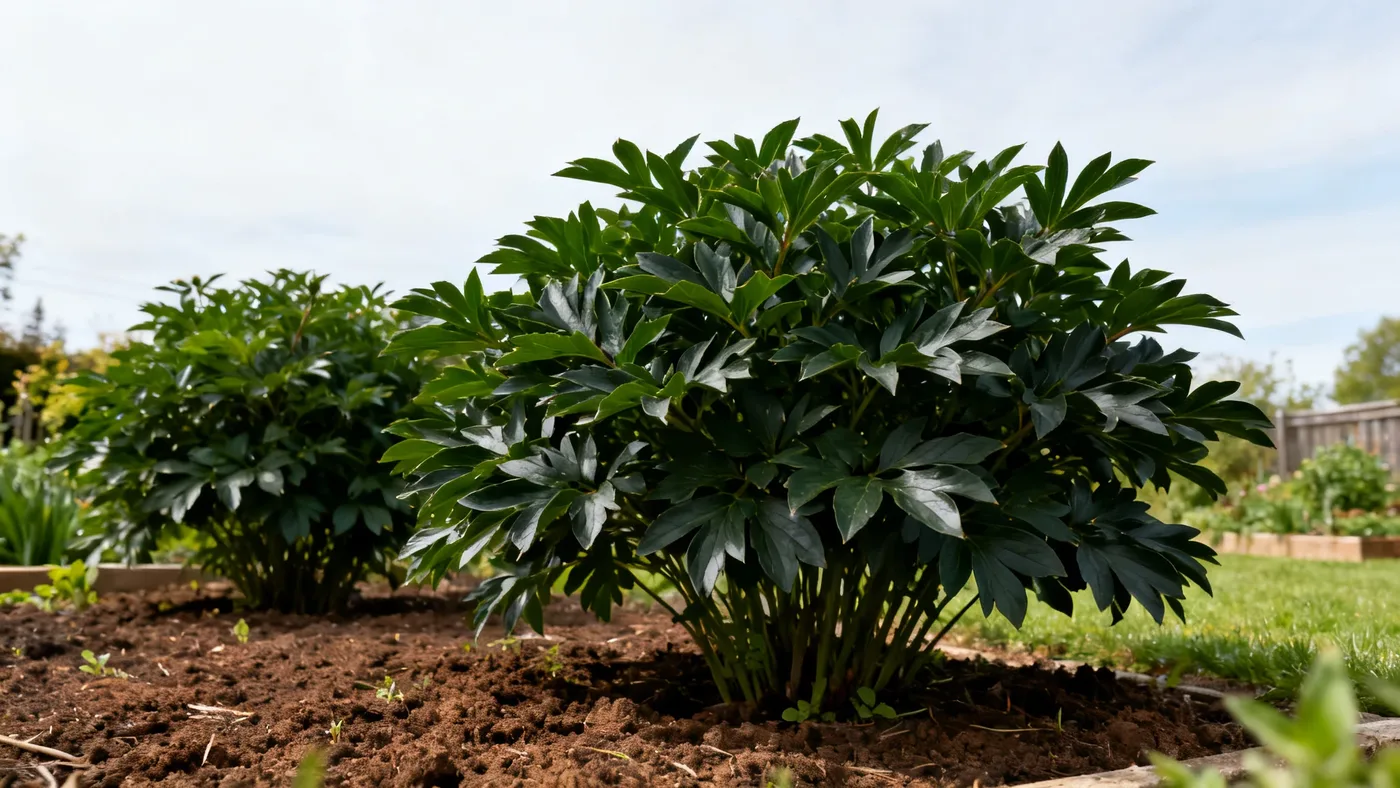
This myth conflates two separate facts. It's true that Duchesse de Nemours Peony is unpalatable to deer and rabbits. But the plant doesn't stay small because of that. Evidence shows that Duchesse de Nemours reaches a mature height of 26 to 36 inches and spreads 24 to 36 inches wide, developing a substantial presence in any garden. This size, combined with the plant's resistance rating, makes it an excellent candidate for mixed perennial borders and cutting gardens where deer pressure is a concern.
The moderate size also works in your favor: a young peony transplant is small enough to protect with a simple fence if needed during its first year, but it grows quickly enough that by year two or three, its size alone makes it less vulnerable to casual browsing. Growth reaches full maturity in about 3 to 4 years, and the plant will then persist for 50 or more years with minimal size change year to year.
Myth 4: "You Don't Need to Think About Wildlife Protection When Planting Peonies"
Here's where practical wisdom matters. While Duchesse de Nemours Peony is highly resistant to both deer and rabbits, new transplants in their first season can still face risk if wildlife pressure is severe. Evidence indicates that tender new growth is always more vulnerable than established foliage. A young peony in full leaf will rarely be browsed, but a freshly planted transplant in early spring might warrant temporary protection if you garden in a high-pressure area.
A simple 3-foot-tall fence around new plants for the first 6 to 8 weeks (from emergence to established growth) removes even the small residual risk. This approach balances the known resistance of the cultivar with the reality of your local wildlife pressure. It's not that peonies need lifelong protection, but that young plants benefit from short-term support until they've filled out.
Additionally, proper planting and care strengthen your peony's ability to withstand browsing pressure. A well-nourished plant with rich, humus-rich, well-drained soil recovers faster from any incidental damage than a stressed plant. Evidence suggests that healthy, vigorous peonies bounce back more readily, another reason to invest in good soil preparation at planting time.
Myth 5: "All White Peonies Are Equally Resistant to Deer"
Not all cultivars carry the same wildlife-resistance rating. Duchesse de Nemours, with its creamy white flowers and pale yellow flushed center, earns its high resistance rating based on field observations and horticultural experience. Other white-flowering peonies exist, but resistance varies by cultivar and growing conditions.
Research suggests that the broader peony family (Paeoniaceae) tends toward high deer and rabbit resistance overall, but individual cultivars can differ. When shopping for deer-resistant peonies, it's worth verifying the cultivar name and its known resistance rating rather than assuming all white peonies perform identically. Duchesse de Nemours is a proven choice with a long track record.
Bloom time can also influence risk. Duchesse de Nemours flowers in early to mid-season, typically in May depending on your zone. Research indicates that peonies blooming during peak spring deer activity sometimes face bud-stripping, though the plant itself remains resistant. Once flowers open, they attract bees and occasionally ants (which visit the nectar and cause no harm), but deer typically ignore open blooms.
Why Deer and Rabbits Avoid Peonies: The Chemical Story
Evidence suggests that peonies contain natural alkaloids and other compounds that make the foliage unappetizing to herbivores. Unlike many ornamental plants that rely solely on texture or toughness for defense, peonies have a genuine chemical barrier. This explains why deer resistance holds even when plants are young and tender. The compounds accumulate in the plant tissue regardless of age, though mature foliage offers additional protection through physical toughness.
This is also why peonies rate as mildly toxic to pets if ingested in quantity. The same compounds that deter deer also defend against other browsers. This doesn't make peonies dangerous to pets living nearby (casual contact is fine), but it does explain the botanical basis for wildlife resistance.
Practical Takeaways for Your Garden
Duchesse de Nemours Peony delivers on its promise of high deer and rabbit resistance. You can confidently plant it in perennial borders where wildlife pressure exists, knowing the odds strongly favor success. The cultivar's proven track record, combined with its mature size of 26 to 36 inches, gives you a reliable, long-lived perennial that won't spend its life under wraps.
Pair Duchesse de Nemours with other deer-resistant companions like iris, salvia, catmint (Nepeta), and baptisia to create a garden that thrives without constant fencing or repellent applications. This approach lets you spend your time enjoying your peonies rather than managing wildlife pressure.
Quick Reference: Myth vs. Reality
| Myth | Reality |
| "Peonies are 100% deer-proof." | High resistance, not absolute. Severe drought or overpopulation can increase pressure. |
| "Rabbits freely eat peony foliage." | Rabbits avoid peonies even more than deer; very low risk of browsing. |
| "Young peonies don't need any protection." | First-season transplants may benefit from temporary 6-8 week fencing in high-pressure areas. |
| "All white peonies resist deer equally." | Resistance varies by cultivar. Duchesse de Nemours has a proven high-resistance rating. |
| "Once established, peonies need no wildlife management." | Established plants rarely face browsing. Healthy soil and vigor improve recovery if damage occurs. |