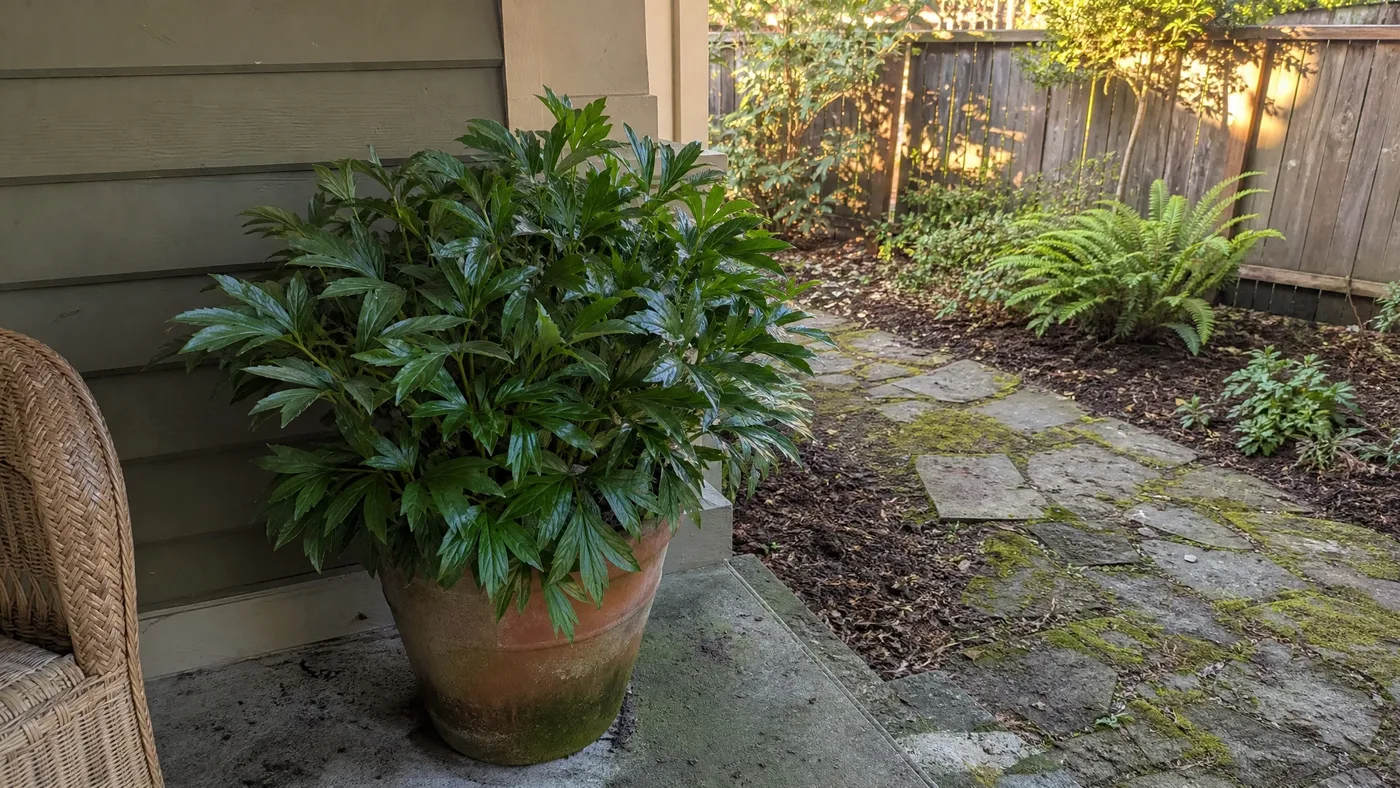
Duchesse de Nemours vs Sarah Bernhardt Peony: Fragrance and Bloom Time
A spreadsheet-minded gardener will count the cost per bloom over ten years before choosing between these two peonies, and that habit is sound, because a peony in the wrong spot never gets a cheap second chance. On a windy corner a heavy double goes down in the first storm and the buds rot on the soil. In a pot that cooks, the clump sulks and skips flowers for seasons. Peonies grow slowly, so a mistake in year one is still showing in year five.
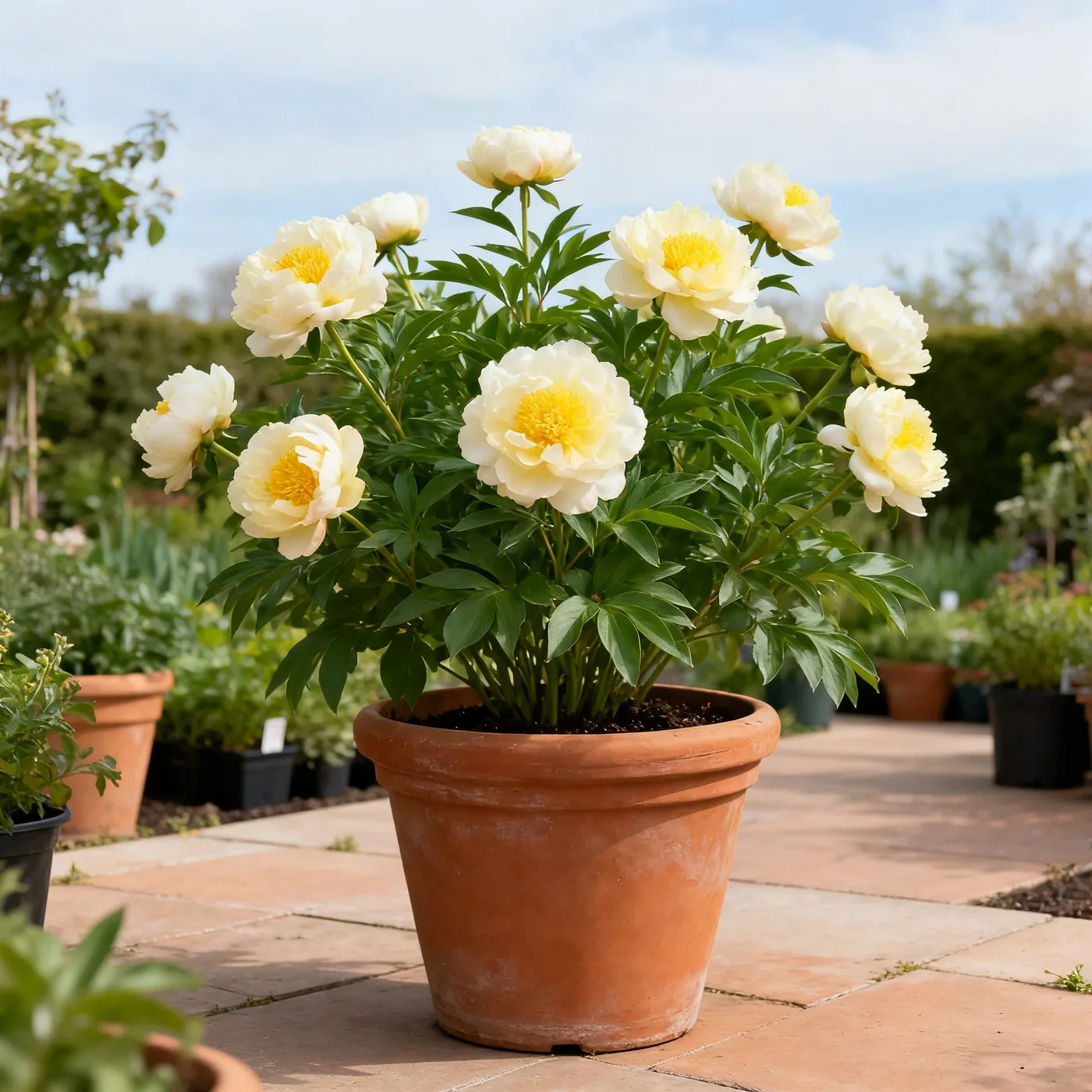
Duchesse de Nemours is the earlier white double with a cream center. Sarah Bernhardt is the later, larger pink that most gardeners already know. Read on for four yard situations, a ten-year cut-flower budget and a plan for which to buy first and which to add later.
A Narrow Side Bed for Duchesse de Nemours Peony
A narrow strip beside a house wall or fence is where this cultivar earns its place. Duchesse de Nemours reaches about 20 to 40 inches in both height and spread, so a mature clump stays inside a modest footprint. Sarah Bernhardt runs taller and carries bigger flowers, and it wants more air around it than a side bed usually offers. Our size and spread guide covers how the clump fills out.
Slow growth also works in your favor here. Herbaceous peonies are slow growers, so the clump fills its space gradually over several years and never crowds the path in a rush.
Scent Near a Path
Where a path runs beside the bed, fragrance should decide the choice before color does. Sarah Bernhardt is agreeably fragrant, but not especially so, and that matches what we smell in our rows: pleasant, soft and easy to miss from a step away. Duchesse de Nemours carries the cleaner, stronger perfume, the kind a passerby notices. Our scent guide explains how it shifts through the day.
Bloom Timing and Cost per Bloom
Each plant flowers for about two weeks, and Duchesse opens ahead of Sarah Bernhardt, which is a late bloomer. In a bed with room for only a few crowns, every plant has to earn its square foot. Count the plant, the support you will buy for it and the years until it performs. The shorter, tidier white double asks for less of that spending, and its early flowers finish before summer heat arrives.
Pairing the two in one strip stretches the show across the late spring, white first and pink after. If space allows only one, we would choose the white for a path-side bed.
Duchesse de Nemours Peony on a Windy Corner Lot
Wind is where these two peonies part ways most plainly. Sarah Bernhardt stands about 3 feet tall, with double flowers roughly 8 inches across, and the plant may need support. The heavy flowers bend the stems to the ground, and the cultivar now requires support while in bloom. A corner lot adds gusts to that weight, and every storm becomes a test of the stems.
Staking Cost Over Ten Years
Staking is a cost you can price. A peony ring or cage is a one-time purchase for each plant, and it lasts many seasons if you store it dry over winter. Set it over the clump in early spring, before the shoots fill in, because the stems grow up through the ring and hide it. Common advice says to stake once a plant starts leaning, but by then you cannot slide a ring over full stems without snapping some.
Duchesse needs a ring too on an exposed corner. It is the shorter plant and catches less wind, but a rain-soaked bloom still bows. We suggest one ring per plant for both peonies and treating it as part of the purchase price.
Losses and Siting
Losses show up as snapped stems, bruised petals and buds that never open. We often see a peony on a windy corner lose its first good flush to a single storm, and the owner blames the plant when the site was the problem. Moving it a few feet toward the lee of a fence or wall costs nothing in light. Peonies do well in full sun to light shade, and this cultivar suits full sun or partial shade.
On a corner with real wind, we would plant Duchesse and ring it. Sarah Bernhardt belongs there only if you will stake it every spring without fail and cut the flowers for the house, where their weight does no harm.
A Hot Deck Pot and Its Trade-Offs
A pot on a hot deck is the hardest of the four situations, and we say so plainly. NC State lists peonies as doing best in zones 5 to 7, though they can grow in zones 3 to 8, and a container on sun-baked decking runs hotter than ground soil in summer. In winter the roots sit in air rather than earth. Check with your local extension service on how a pot behaves in your zone before you commit to one.
Heat and Light
Give the pot the cooler half of the deck. Duchesse de Nemours does well in full sun or partial shade, so afternoon relief is allowed, and a pot that gets morning sun and a shaded afternoon loses less water and keeps its roots calmer. Thick-walled or pale pots warm more slowly than thin dark plastic. Water on a steady schedule through summer, because a drying pot is a quick way to lose a slow plant.
Size Limits and Replacement Years
Both peonies are slow and both want a large, deep container, so the pot itself is a main expense. Sarah Bernhardt's tall stems and heavy heads make a pot top-heavy and easy to tip in a gust, which is one more reason to give the deck to Duchesse. Our container guide covers pot size and potting mix in detail.
Budget honestly for replacement. A potted peony usually has a shorter run than one in the ground, so plan either to replace it after some years or to divide it and move the pieces to a bed. We tell customers a deck pot is a way to enjoy the scent close to the door while the garden planting grows up, not a permanent home.
Cut-Flower Row Budget Over Ten Years
A cutting row is the one place where Sarah Bernhardt wins back ground. It is a beautiful cut flower but not generally good for garden display, and that fits a row where nobody minds floppy stems because you cut the flowers first. Duchesse de Nemours is the better all-rounder: white with a cream center, scented, and earlier, so its first stems reach the vase before the pink ones open.
Vase Life, Yield and Scent
Customers usually ask us how many stems a plant will give. The honest answer is few in the early years, because growth is slow, then more as the clump matures. We do not quote a number, since it depends on your site and the age of the plant. Vase life is close enough between the two that scent and bloom window should drive the choice, and indoors the white double's perfume fills a room more readily than the pink's.
Ten-Year Spend Compared
The table below sets the running costs of a row against each other, using only what the sources and our rows support.
| Cost or trait | Duchesse de Nemours | Sarah Bernhardt |
|---|---|---|
| Support each spring | A ring is wise, light duty | Ring or cage required |
| Bloom window | Earlier | Late |
| Scent in a vase | Stronger | Pleasant, mild |
| Garden display | Holds up well | Better cut than displayed |
| Space per clump | About 20–40 inches across | Taller, so allow more room |
Because each plant flowers for only about two weeks, a row with both cultivars stretches your cutting season well past what either gives alone. That is the strongest budget argument for owning one of each by year ten.
Choosing Duchesse de Nemours Peony or Sarah Bernhardt
Add the trade-offs up and the pattern is clear. Sarah Bernhardt costs more to keep upright and gives its best as a cut flower, and its price is paid in rings, yearly labor and the occasional lost stem. Duchesse de Nemours costs less to support, perfumes the bed and opens first. A peony is planted once and stays for decades, so neither plant is expensive over ten years. The real costs are the wait and the space. Our buying guide helps you pick a size that shortens that wait.
If You Have Budget for One Plant
Choose Duchesse de Nemours. It suits the side bed, survives the windy corner with a ring, and is the safer choice for a pot. Its white flowers with cream centers also pair with nearly any color scheme. If pink is your color, accept that you are paying for it in support and that the flowers will do their best work in a vase.
If You Can Add a Second Plant
Wait until the first has settled, then add Sarah Bernhardt in year three. By then you will know your site's wind, light and moisture, and you can set its support in place before the first spring shoots. The second plant also changes the bloom sequence, with white first and rose-pink after, and our bloom time and flower color guide shows how to space them.
Buy Duchesse de Nemours First, Add Sarah Bernhardt Later
For most yards, Duchesse de Nemours is the safer first peony. It is shorter, earlier, more fragrant and cheaper to hold upright, and it gives the wait for the first bloom a good reason to be endured. Sarah Bernhardt is a fine second plant for cutting, once you have a site you trust and a support ready.
Duchesse de Nemours Peony
Nursery-grown Duchesse de Nemours Peony in sizes from 2 Gallon, shipped to your door.
From $69.95
Shop Now →Here is how we grow Duchesse de Nemours on our farms: in full sun, in well-drained soil, with the crowns set at the right depth. We only ship plants we would plant ourselves, and a peony you choose for its fragrance and early bloom should be one you can trust for years. If Duchesse is your first pick, see the plants we have ready and start your bed with it.