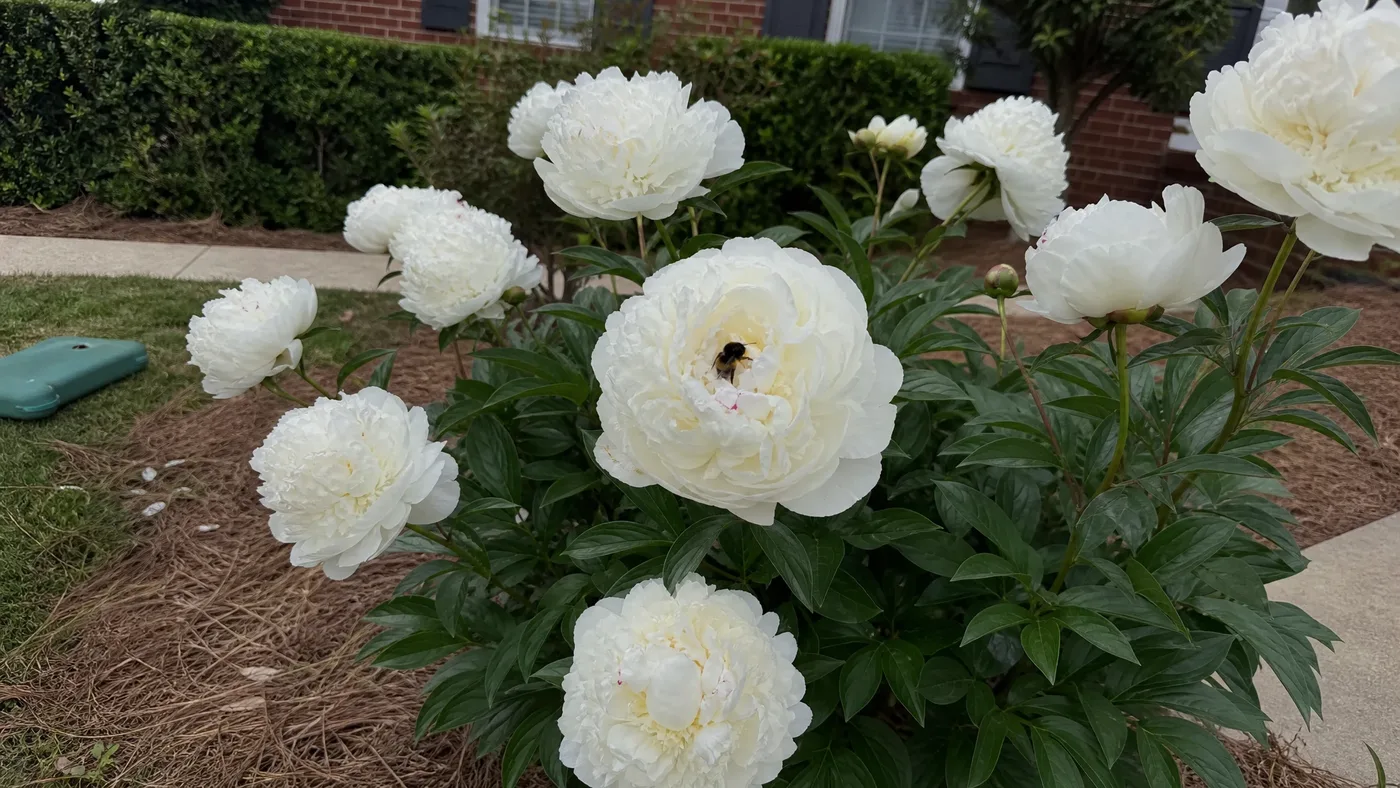
Duchesse de Nemours vs Gardenia Peony: Scent and Bloom Time
Walk the rows at dusk in peony season and the scent reaches you before the flowers do. It drifts low across the bed, and the visitors follow it: ants working the swollen buds, and bees staying out until the light is nearly gone. We noticed it again this season, and it is the best argument we know for planting white doubles.
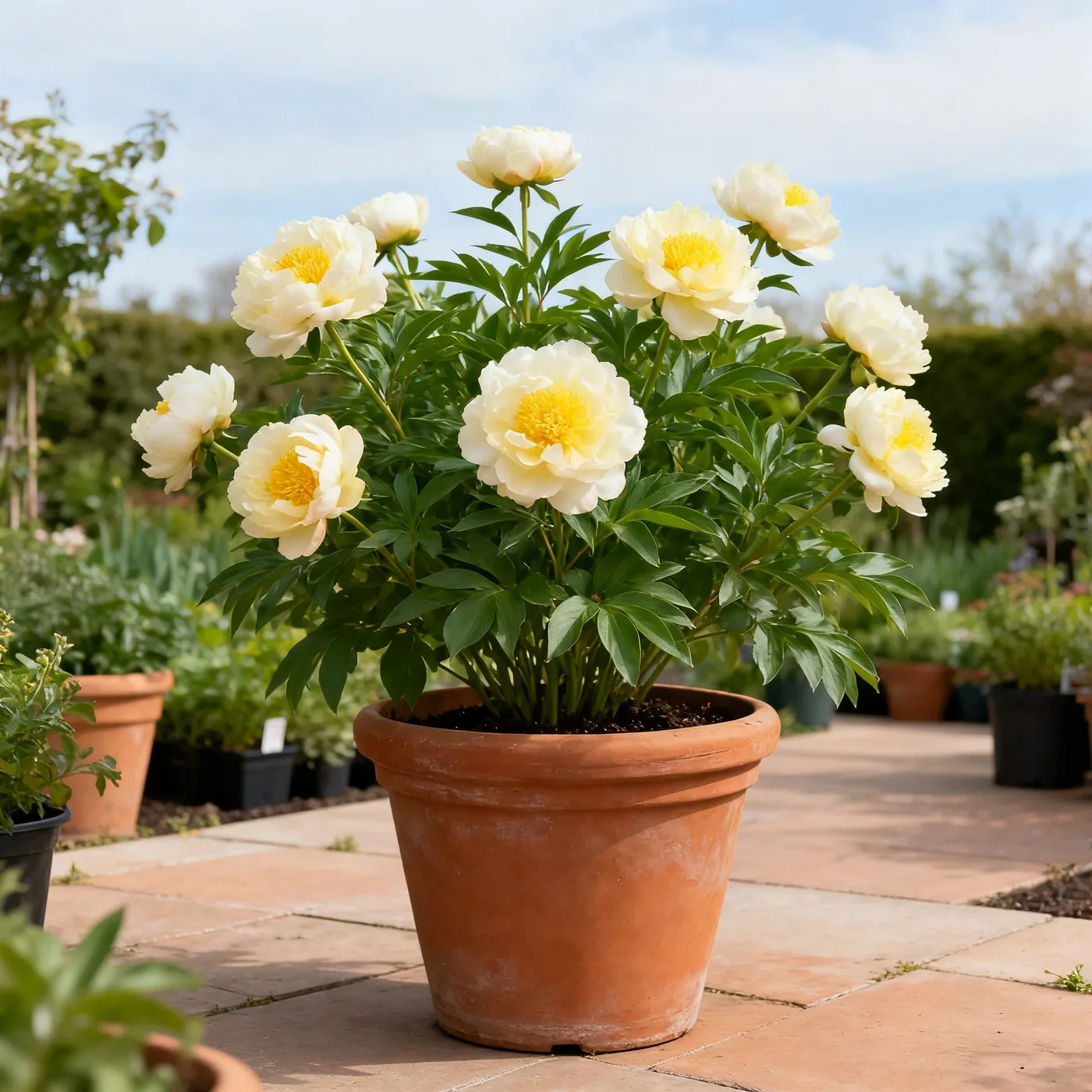
Two of them sit side by side in our rows: Duchesse de Nemours, the 1856 French heirloom, and Gardenia, a later cultivar first shown in 1949. Which one to plant depends on your site, and we will say plainly which we would choose.
This guide covers everything you need to know about choosing between them, from bloom shape and scent to bloom timing, stem strength, height and where to find each one. Choose badly and you get a bed flattened by the first hard rain. Choose well and you get decades of cut flowers.
Two Whites, Two Different Bloom Shapes
On a quick glance these look like the same flower, which is why the search for this pairing exists. Up close they are not, and size is the first difference you can measure.
Reading the Flower Size
Duchesse de Nemours has fragrant, fully double white flowers 6–8 inches across, set against dark green divided foliage. Gardenia carries double white flowers 8–10 inches across, sometimes tinged with a faint pink blush. That blush is the quickest tell in a mixed bed. Duchesse reads as a clean creamy white, while Gardenia may carry a hint of color.
What That Means in a Vase
Six to eight inches is a flower you can set in a bud vase or a jug with three or four stems and still see the whole bloom. A Gardenia bloom is large enough that one stem can fill a short glass, which is wonderful on a table and awkward in a mixed arrangement. Our pick for cut-flower work is Duchesse, because the scale is easier to handle.
The heirloom also reads as softer, more cottage than show-bench. Gardenia has the look of a plant bred to win.
Duchesse de Nemours Peony Scent Against Gardenia Perfume
Both cultivars are listed as fragrant, and no source we use ranks one above the other, so what follows is our nose and not a measurement. Duchesse has a soft, sweet scent that tends to hang in the air close to the plant and then fill a room once cut. Our scent guide for Duchesse de Nemours goes deeper on how the fragrance changes through the day.
Gardenia, with flowers 8–10 inches across, makes up in volume what it may lack in delicacy. More petals open at once, so a bed of it can carry further on a warm evening. If you want to smell peonies from the porch, that scale helps. If you want to put your face into one flower and find something gentle, we prefer Duchesse.
Scent in a peony is partly a signal to insects, and it behaves like one. It is strongest when the flowers are freshly open and the air is warm and still, and it fades with a cold snap or a heavy shower. Plant either cultivar where you pass it often, near a path, a gate or a seat, because a fragrant bed in the far corner wastes most of what it offers.
Bloom Timing and the Bees Duchesse de Nemours Peony Draws
Peonies of this type flower in late spring to early summer, and North Carolina State Extension notes that each plant blooms for about two weeks. In our rows Duchesse opens a little ahead of Gardenia, so the two hand off more than they overlap. Exact dates shift with your zone and spring weather, so check with your local extension service for your window. Our bloom time guide covers the Duchesse side in more detail.
Who Visits the Flowers
Both are fully double, which packs the stamens and nectar-bearing parts under layers of petals, so neither is a first-choice flower for the bees that want easy access. Ants work the buds in the days before opening, and bees visit the open blooms in the morning and evening when the scent is strongest.
A planting in sequence keeps the visitors coming longer, because the bed offers flowers across more days than one cultivar can. If pollinators matter to you, that argues for planting both, with some single-flowered plants nearby for insects that struggle with doubles.
Stems That Stand and Stems That Lean
This is where Gardenia wins, and we say so plainly. Gardenia has strong stems that hold the large bloom perfectly erect, on sturdy stems. Duchesse de Nemours is the opposite case: it may need support and wants a sheltered position.
What a Wet June Does
A heavy double flower soaks up rain and gains weight fast, and a stem that was upright at breakfast bows by supper. Duchesse flowers are smaller than Gardenia's, but they are not light, and a gust after a storm will lay them on the soil. Once the petals are muddy they rarely recover, so the lean is more than a cosmetic problem.
Supporting Duchesse Early
Put a ring or grid support over Duchesse in early spring, before the shoots are knee high, so the foliage grows through it and hides it. A common worry is whether staking spoils the look. Done early, it does not, and the plant simply looks held up by its own leaves. Leave support off until the stems are already flopping and you will be tying up wet, heavy growth that snaps.
If your bed is open and windy, with no fence or hedge to break the gusts, that is a real reason to choose Gardenia instead.
Tall Border Presence Against Compact Mounds
Neither is truly compact, and the height gap is smaller than the names suggest. The table below sets out how they compare, with heights converted to inches.
| Trait | Duchesse de Nemours | Gardenia |
|---|---|---|
| Height | Up to about 31 inches (range 20–39 inches) | Up to about 35 inches |
| Flower size | 6–8 inches | 8–10 inches |
| Habit | Mound of dark green divided foliage | Bushy, clump-forming |
| Support | May need it | Sturdy stems |
Because the ranges overlap, the difference you notice in the border comes from flower size and how the stems carry it. Gardenia stands up straighter and shows larger faces, so it holds the back or middle of a bed. Duchesse suits the middle or front, where its mounded foliage covers the ground and a slight lean is forgivable.
Our size and spread guide shows how Duchesse fills out over the first few years, which is slowly, as North Carolina State Extension rates herbaceous peonies. Expect a modest clump at first and a full one later, and plan the neighbors around that.
Where to Find Each One for Sale
Duchesse de Nemours is the easier of the two to find as a divided root or potted plant, because it has been grown and sold for so long. We grow it ourselves, and our plants arrive as established roots. For what to look for, read our buying guide.
Gardenia is a 1949 cultivar bred by Lins in Minnesota, and stock varies by region and season. We cannot tell you which suppliers carry it this year, so ask whoever sells it to confirm the cultivar by name and the size of the root. Peonies sold under a loose label like "white double" are the commonest source of disappointment, because the name is the only thing that tells you the plant will behave like the descriptions here.
Planting Duchesse de Nemours Peony and Gardenia Together
The extension rating for peonies is zones 3–8, with zones 5–7 best. So they share a climate, and the practical question is whether they share a bed. They do well together, with two adjustments.
Give Each Its Full Spread
Spacing is where mixed plantings go wrong. Duchesse spreads 20–39 inches, and we have no figure for Gardenia's spread, so check with your local extension service. Allow each plant its full mature width rather than the gap that looks right at planting. Slow growth makes a young bed look sparse, so fill the gaps with annuals rather than tighter spacing. Our planting guide covers depth and timing.
Match the Site to the Weaker Stem
Both take full sun to light shade. Put Duchesse in the more sheltered end of the bed, near a fence or a larger shrub, and let Gardenia take the exposed end, where its sturdy stems cope better with the wind. Planted apart, each cultivar sits where it is happiest, but side by side they flower in sequence from one spot, which is the better reason to combine them.
A Season Built on Duchesse de Nemours Peony Plus One
Each plant flowers for about two weeks, so one peony alone gives you a short, glorious window and then green foliage. Planting Duchesse followed by Gardenia lengthens the run, with the first bloom opening before the second has finished. How much longer depends on your zone and the spring you have.
The foliage matches too. Both carry dark green, divided leaves, so the bed looks cohesive after the flowers go, and the planting stays tidy until frost.
If you can only plant one, we would choose Duchesse de Nemours for scent, cut flowers and heirloom character, provided you can give it a sheltered spot and early support. Choose Gardenia if you garden on an open, windy site and want larger, more upright blooms.
Why Duchesse de Nemours Peony and Gardenia Share a Bed
The choice comes down to a few named traits. Duchesse de Nemours is the 1856 heirloom with 6–8 inch fragrant doubles that suit a vase, and it wants shelter and a ring of support. Gardenia is the later, taller cultivar with 8–10 inch blooms on stems that stand up in rain. Plant the first if scent and tradition rule, the second if wind does, and both if you have room.
Duchesse de Nemours Peony
Nursery-grown Duchesse de Nemours Peony in sizes from 2 Gallon, shipped to your door.
From $69.95
Shop Now →Full sun and well-drained soil are what our Duchesse de Nemours gets in our rows, and we keep the fragrant white doubles in mind each time we plant. Every plant we ship comes from those same rows, top-quality peonies from our own ground. If the scent has won you over and you are ready to plant, take a look at our shop.