Duchesse de Nemours vs Duchesse de Lorraine Peony
If you searched for Duchesse de Lorraine and ended up reading about Duchesse de Nemours, or the other way around, you are in good company. We hear this mix-up on the phone all the time, and it is easy to fix once you know what to look for. The two names share a first word, a French title and a spot on plenty of wish lists.
They are still two separate plants, and planting the wrong one means waiting years for a bloom you did not want. This guide covers everything you need to know about telling them apart, from the plant type and the flower to the care each one expects and the way listings blur the names. We will settle it one common belief at a time.
Is Duchesse de Nemours Peony Just a Lorraine Spelling?
No. This is the belief we hear most, usually phrased as "I think it's just another way to spell it." It is not a spelling variant, a regional name or a renamed version. Nemours and Lorraine are two cultivars with different parentage, and they are sold under different names for good reason.
Duchesse de Nemours is Paeonia lactiflora 'Duchesse de Nemours', a classic herbaceous peony introduced in 1856. It is a herbaceous perennial to about 31 inches with fragrant, fully double, white flowers 6–8 inches across. That one sentence is the plant we grow.
Duchesse de Lorraine is a different plant altogether, and it belongs to another group of peonies. Both names point back to French noble titles, which is why they sound like cousins. Sounding alike is where the family resemblance ends.
Why the Names Get Swapped
People remember "Duchesse de" and fill in the second half from memory. Add a tag that has faded in the sun or a photo caption typed in a hurry, and the swap is made. If you have already bought one while meaning the other, do not panic. Check what you have against the sections below and you will know within a season.
The reassuring part is that nothing about the mistake is permanent. A peony root that sits happily in your border is still a good plant, and you can decide later whether to keep it or add the one you originally wanted.
The Itoh Label Belongs to Lorraine, Not Nemours
The second belief is that both are Itoh peonies. Only Lorraine is. Itoh peonies, also called intersectional peonies, are crosses between an herbaceous peony and a tree peony. Duchesse de Nemours is not a cross of any kind. It is a straight Paeonia lactiflora in the old-fashioned garden peony tradition.
The University of Wisconsin Extension explains the difference well. It says Itoh peonies are a hybrid of the herbaceous and tree peony and have short woody stems that still die back to the ground in winter. Herbaceous lactiflora types such as Nemours form bushy mounds with soft stems.
This table sets the two side by side.
| Duchesse de Nemours | Duchesse de Lorraine | |
|---|---|---|
| Type | Paeonia lactiflora, herbaceous | Itoh (intersectional) hybrid |
| Parentage | Herbaceous peony only | Herbaceous x tree peony |
| Stems | Soft, bushy mound | Short, woody-influenced stems |
| Introduced | 1856 | Check the listing |
If a seller calls Nemours an Itoh, the label is wrong. If a seller calls Lorraine a classic lactiflora, the same is true. The Itoh word is the quickest way to sort the two, and it is the first thing we look for on any tag.
Duchesse de Nemours Peony Dies Back Every Winter
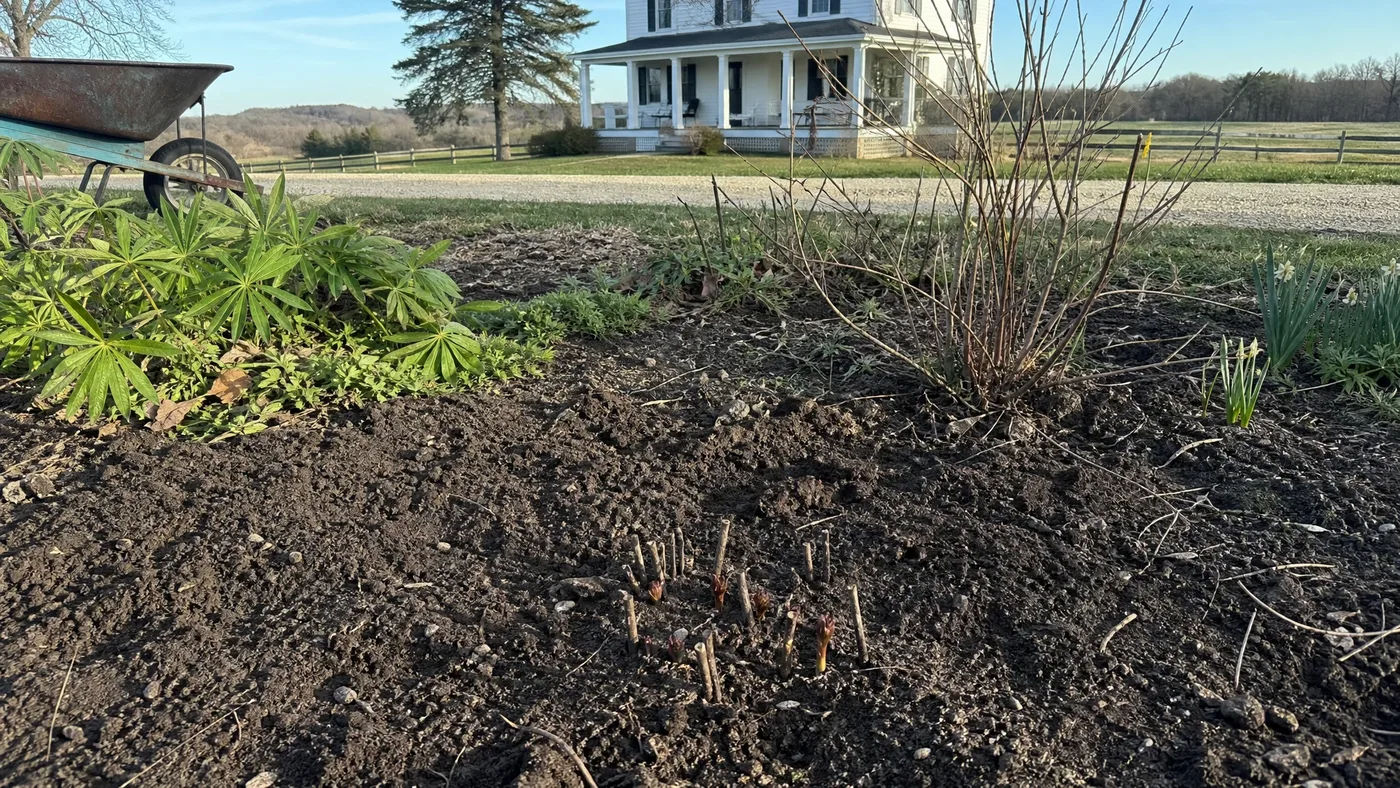
A peony that vanishes from the border looks alarming, but it is meant to. Duchesse de Nemours is herbaceous, so the stems and leaves die down after frost and the plant rests underground as its crown and roots until spring. The same Wisconsin source notes that herbaceous P. lactiflora peonies feature bushy mounds that die back to the ground in winter. A bare patch of soil in January is a healthy Nemours, not a lost one.
What Winter Looks Like for This Plant
In fall the foliage browns and flops. Once it has fully died back, cut it down to just above the soil, and clear the debris so old leaves are not sitting on the crown all winter. Our pruning guide walks through the timing and the cuts.
Peonies in general grow in zones 3–8 and do best in zones 5–7, according to NC State Extension. Come spring, new shoots rise from the same crown and build the mound again, with dark green, divided foliage.
Where the Lorraine Confusion Comes In
Here is a point that trips people up. An Itoh also dies back in winter, but it leaves short woody stems rather than a soft mound, so its winter look differs from a lactiflora. Dying back does not tell you which plant you have. The stem type and the label do.
Lorraine Blooms Won't Match Duchesse de Nemours Peony Flowers
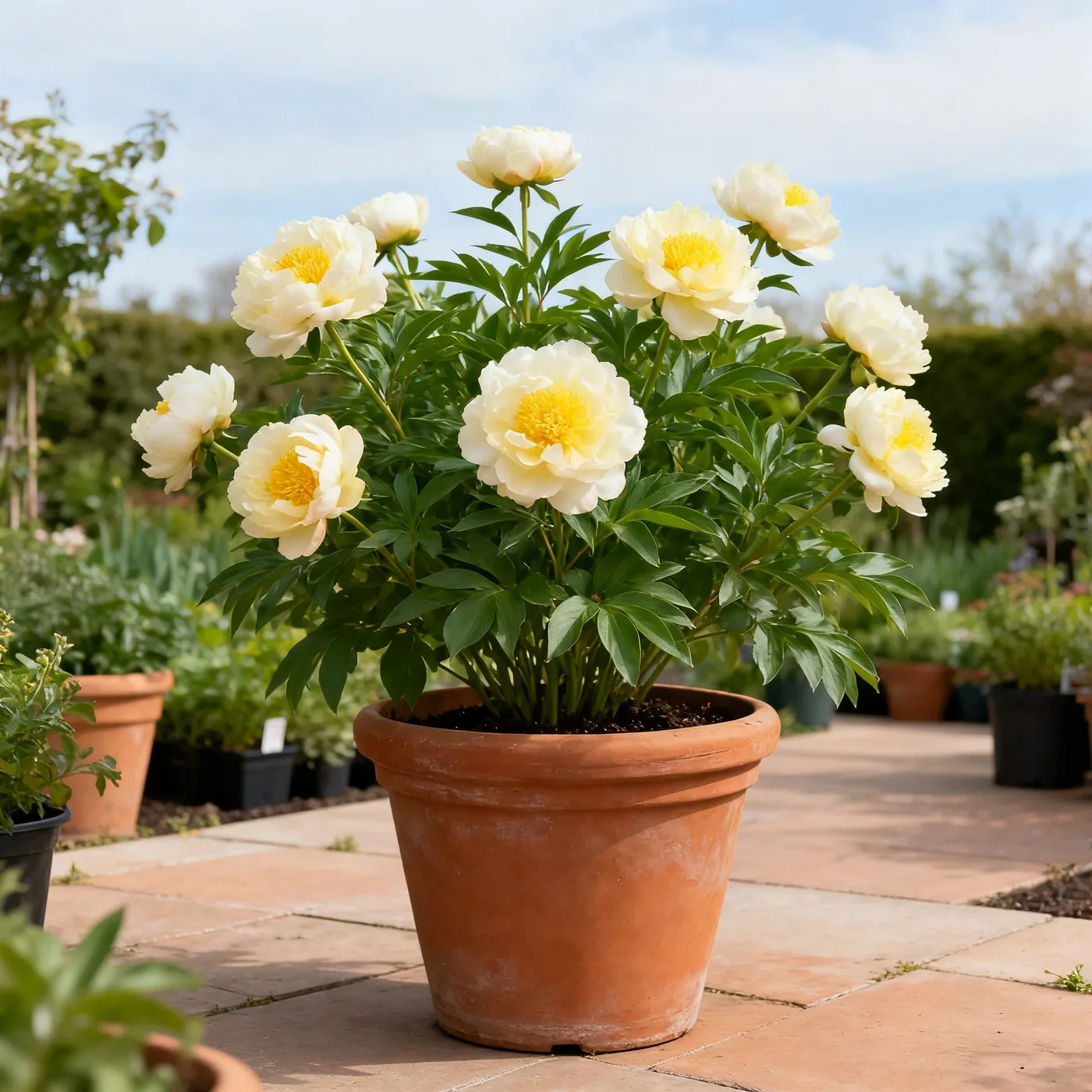
The fourth belief is that the flowers must look alike because the names do. They do not, and this is where Nemours earns its place in cottage gardens. Its blooms are pure white, fully double and fragrant, with the rounded, full-centered shape peony growers call bomb type.
Each flower is 6–8 inches across, on a plant that reaches roughly 20–39 inches. Cut a few stems for a vase and the room smells of them. Our bloom time and flower color guide goes deeper on color and timing.
What to Expect From Lorraine
Duchesse de Lorraine is an Itoh, and Itoh flowers have their own character. They sit on a different plant structure and come in a different color and form than the white bomb of Nemours. We will not describe its petals in detail here, because the sources we trust cover Nemours, not Lorraine. If your heart is set on a white, fragrant, full double, the listing for Lorraine should say so in plain words. If it does not, ask.
Bloom timing is the other thing to confirm. Herbaceous peonies generally flower in late spring to early summer, about two weeks per plant. An Itoh may keep its own schedule, so do not assume the two plants will open together in the same border.
Care for Duchesse de Nemours Peony Is Not Interchangeable
The next belief is that care carries over, so one plan will do for both. It is a reasonable guess and an unreliable one. A soft-stemmed herbaceous mound and a woody-stemmed Itoh hybrid ask different things of you at planting, in pruning and at the end of the season.
We keep the Nemours details in dedicated guides so they stay accurate. For the basics, start with the care guide. For getting a new root in the ground, the planting guide covers depth and spacing. Use those for Nemours and your own Lorraine tag for Lorraine.
Light Is the Exception
The one place the advice happens to overlap is sun. Peonies do well in full sun to light shade. Even so, a sunny site is the best bet for any peony.
Pruning is where mixing the plants up costs you most. Cut an Itoh as though it were a Nemours, or the other way around, and growth can look off the next spring. Know which plant you have first, then pick the guide.
Be Patient With Both
Herbaceous peonies grow slowly, per NC State, and a new Nemours can take a few seasons to bloom well. That is normal. A peony planted once is one you keep for decades, and the wait is part of the bargain. Give the plant a settled spot, because peonies resent being moved, and the flowers will be worth the years.
Nursery Listings Mix the Two Names Up
Online, the confusion multiplies. Search results pull in both names, product titles get shortened, and a photo of one plant can end up under the name of the other. Some sellers copy descriptions from a similar plant without checking. None of it is malice. It is just how the web blurs things.
The fix is to read past the title. Look at the botanical name, the plant type and the written description of the flower. A listing that says Paeonia lactiflora 'Duchesse de Nemours' and describes a white double is describing Nemours. A listing that says Itoh or intersectional is not.
Red Flags in a Listing
A title that says only "Duchesse," with no second name, leaves you guessing which plant is meant. Be just as careful with a plant called Itoh and also described as white, bomb-shaped and fragrant, because that mixes Lorraine's group with Nemours' flower. A photo with no caption or botanical name to back it up deserves the same caution.
The last warning sign is a description with no plant type at all, only a color and a price. When two of these show up together, we would pause before ordering and ask the seller to confirm the botanical name in writing. A good seller will not mind.
Buying the Right Duchesse de Nemours Peony With Confidence
If you want the white, fragrant, 1856 classic, you want Nemours. If you want an Itoh with woody-influenced stems, you want Lorraine. We would choose Nemours for anyone who wants a traditional cut-flower peony with a heritage story, and Lorraine for a gardener who specifically wants an Itoh and has read its own tag. Neither is the wrong plant, just a different one.
Here is a checklist to run before you pay.
- Find the botanical name. Nemours is Paeonia lactiflora 'Duchesse de Nemours'.
- Check the plant type. Herbaceous means Nemours. Itoh or intersectional means Lorraine.
- Read the flower description for a fully double white bloom with fragrance.
- Confirm the seller says whether it ships as a bare root or a potted plant. Our buying guide covers sizes.
Our growers send Nemours with its name and type on the label, so it does not get lost on the way to your garden.
Keeping Your Peonies Straight for Decades
Duchesse de Nemours is a white, fragrant, herbaceous lactiflora from 1856 that dies back each winter. Duchesse de Lorraine is an Itoh hybrid with its own stems, flowers and care. The names are close and the plants are not, so let the botanical name and plant type decide.
Duchesse de Nemours Peony
Nursery-grown Duchesse de Nemours Peony in sizes from 2 Gallon, shipped to your door.
From $69.95
Shop Now →We grow Duchesse de Nemours on our own farms in full sun and well-drained soil, the way this classic white lactiflora does best. Every plant we sell, from peonies to trees, shrubs and grasses, is top quality and grown by us on those same farms. When you are ready to put the right Duchesse de Nemours in your garden, browse what is in stock now.