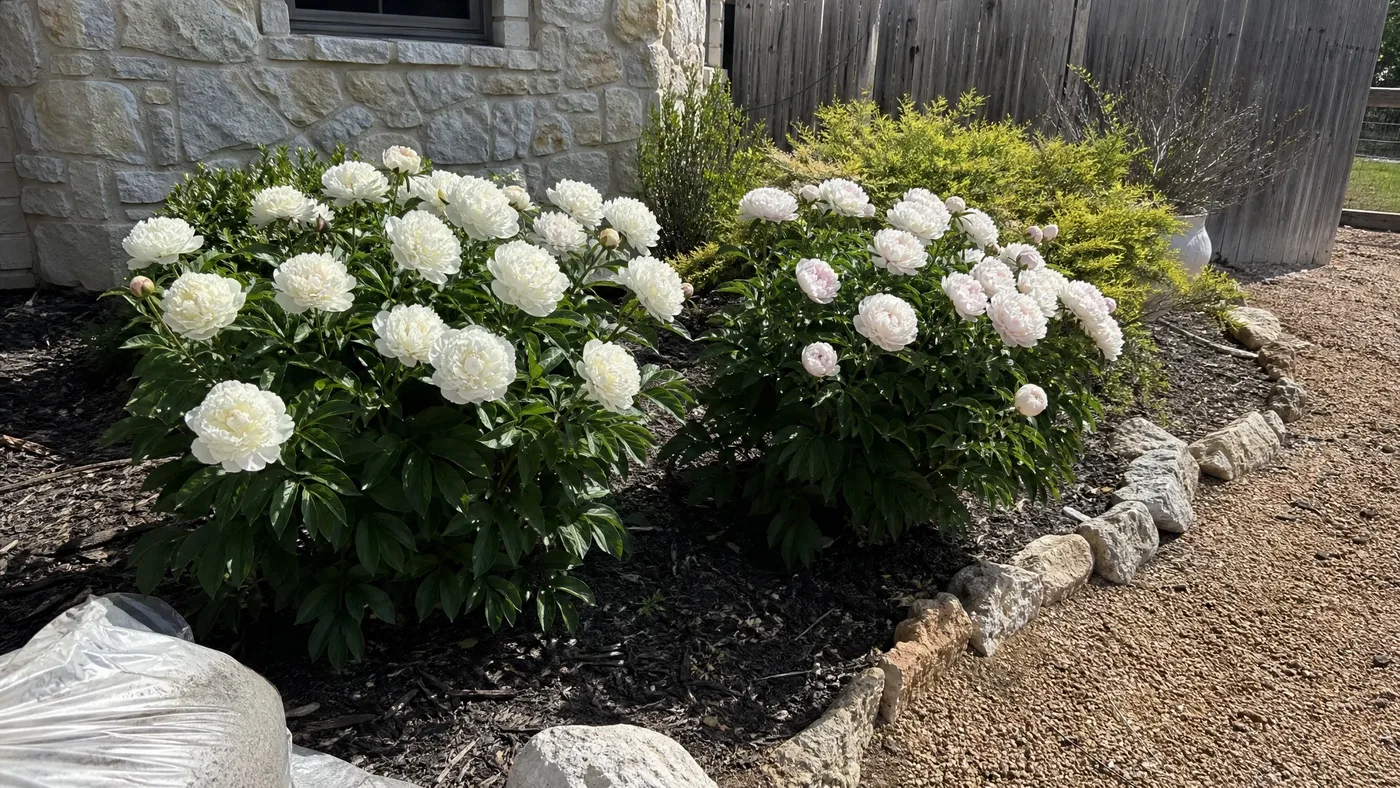
Duchesse de Nemours vs Shirley Temple Peony: Key Differences
Blush, as peony growers use the word, names a pink that fades. A petal opens tinted and slowly loses that tint until it is nearly white. The change happens over days, on the plant, and it is the reason two peonies sold as "white" can look quite different in the same vase.
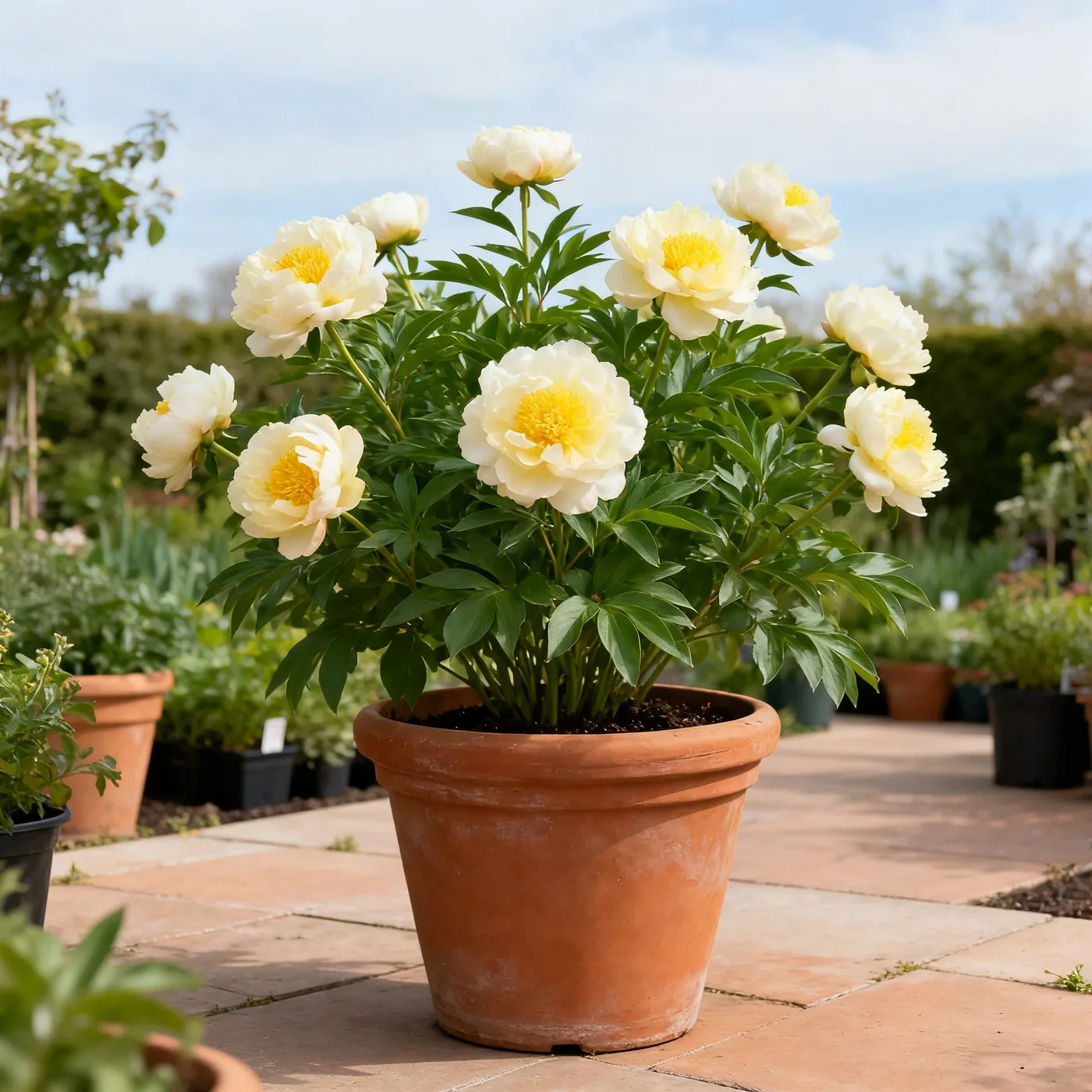
Many shoppers assume Duchesse de Nemours and Shirley Temple are interchangeable whites and choose on price or availability. What we see instead is that the two behave differently from the first bud. That difference decides what you cut, what you photograph and how your border looks from one week to the next.
This article talks about how each petal changes color, how large and full the flowers are, how much cold they take and which one is easier in the border, and answers the questions customers ask us most. Read on to learn which of the two suits your garden and how to tell them apart in bloom.
What Blush Means on a Peony Petal
Three terms do most of the work in this comparison, so we define them first. Each describes something you can watch happen on a real flower, and once you can name them, the differences between these two cultivars become easy to see.
Blush. A blush petal carries a faint tint of pink over a pale base. Think of a watercolor wash that dries lighter on the paper than it looked when wet. The color is strongest in the bud and weakest on the last day of the flower, so "blush" describes a stage as much as a color.
Transition. This is the shift from the first color to the last. Some peonies hold their color almost unchanged, while others travel a long way from bud to finished bloom. The size of that journey is the main thing separating our two plants, and we score each one on it below.
Double form. A double peony has so many petals that the stamens at the center are hidden or nearly so. "Fully double," the phrase for both of these cultivars, means the flower is a dense mass of petals with no open center. Density changes how the color reads, because more layers mean more shadow between petals.
Both plants are Paeonia lactiflora, and NC State Extension lists them together among its white-flowered lactiflora cultivars. That shared label hides the transition, which is why shoppers confuse them.
One of the most common questions we get is whether Shirley Temple is simply a pink Duchesse. It is not. They are two separate plants that finish in similar places after starting from different ones.
How Duchesse de Nemours Peony Changes Color as It Opens
Duchesse de Nemours has the shorter color journey of the two. The buds show a soft tint, a hint of blush at the tips of the outer petals. As the flower opens, that tint pales into a blush-white, and over the next day or two the center settles into a cream-white that stays there. The flower is plainly described as white, which tells you how little of the pink survives.
The Sequence, Step by Step
First comes the tinted bud, tight and slightly flushed. Next the outer petals loosen and the flower looks blush-white, with the warmest tone deep in the center where the petals are still packed. Last, the whole bloom evens out to creamy white. From the day it opens, you are looking at nearly the color it will keep.
That stability is the practical point. A vase of Duchesse cut at the same stage on different days will match, and a group in the border reads as one color instead of several. Our bloom time and flower color guide follows the same sequence in more detail.
What the Cream Tone Looks Like
Cream here means a white with a trace of warmth, not yellow. Against a dark fence or green foliage it reads as clean and bright. Against a true bright white such as a painted trellis, it looks softer, almost candlelit. We think that is a virtue in a cottage planting, where stark white can look harsh beside old roses.
Verdict on color change: Duchesse wins if you want a white peony that looks white. The blush is a brief opening gesture, and then the flower settles.
Shirley Temple's Pinker Start and Whiter Finish
Shirley Temple makes the longer trip. Its flowers are fragrant, fully double and rose-pink, and they fade to buff-white. Rose-pink is a stronger opening color than the soft pink some catalogs suggest, so expect a visible pink on the first day, not just a whisper.
Buff is a soft, warm off-white with a faint tan or cream cast. So the fade runs from clear pink through a pale pink stage to a warm white. A single plant can carry flowers at several points on that road at once, with fresh pink blooms beside half-faded ones, and that is much of its charm.
Where the Two Look Alike
By the last days of bloom the plants converge. Both end up pale, and a faded Shirley Temple beside a Duchesse can look like cousins. The resemblance is partial, though. Duchesse finishes creamy and clean, while Shirley's finish reads warmer and slightly duller, because it is the end of a long fade rather than a color the flower arrived at on its own.
Timing Shapes What You See
Each peony plant blooms for about two weeks, so a plant's color story plays out in a short window. In our rows, Shirley Temple tends to open a few days after Duchesse. If you plant both, the pink phase of one often overlaps the white phase of the other.
Verdict on color change: Shirley Temple wins for anyone who wants the pink and the fade. It gives you more to look at each day, as long as you are happy with a finish that is buff-white rather than pure white.
Bloom Size and Fullness on Duchesse de Nemours Peony
Both plants make fully double flowers on herbaceous plants of similar stature. Each reaches the same height, up to about 31 inches, with a maximum range of roughly 20–40 inches. Scale will not help you choose. Size and form of the flower itself come down to a few finer points.
Size
Duchesse de Nemours has fragrant, fully double, white flowers that measure about 6–8 inches across. That is a large flower on a plant under three feet tall. We have no matching published width for Shirley Temple, so we would not call either one bigger on paper. Judge by form instead.
Fullness and Form
Duchesse builds its double in tight, even layers, so the flower looks organized and symmetrical. The outline is a neat dome with ruffled petals packed edge to edge. We find Shirley Temple's double a little looser and rounder, with petals that settle more casually as the flower matures.
Looser is not worse. It gives Shirley a relaxed, cottage-garden softness, and the pink tones show between the layers. But if the question is which looks more formal, Duchesse is the clear answer. Our bloom size and flower form guide covers how to keep that fullness from year to year.
Verdict on form: Duchesse is the more formal flower, and Shirley is the softer one. Choose by the mood you want for the border.
Hardiness and Climate for Duchesse de Nemours Peony
Here the two plants are the same, and we say so plainly.
For a US reader the useful frame is the zone range. Herbaceous peonies do best in zones 5–7 but can grow in zones 3–8. Both cultivars are also white lactiflora peonies hardy to Zone 8 or colder. That is a genus-level range, so it describes the group and neither plant individually.
Colder Gardens
If your winters sit at the cold end of the range, either plant will do the job, and you can choose on color alone. Both are herbaceous, which means the stems die back to the ground each fall and the buds wait just below the surface. That habit is what lets them survive hard freezes. Our hardiness zones guide walks through zone by zone.
Warmer Gardens
Toward Zone 8 we would be more careful with both plants. Neither is at its best at the warm edge, and our sources do not separate them there. Check with your local extension service about how peonies perform in your area, then pick the one you prefer to look at. Give either one full sun to light shade.
Verdict on climate: a tie in cold gardens and a tie in warm ones. Climate should not decide this purchase.
Which Needs Less Fuss in the Border?
Because both plants are Paeonia lactiflora and nearly the same size, their needs overlap almost completely. Each is a slow grower, so expect to wait for the first full flush on either one. The table sets out the main jobs side by side.
| Job | Duchesse de Nemours | Shirley Temple |
|---|---|---|
| Soil | Well-drained, rich soil, no standing water | The same |
| Support | Add a ring early, as heavy double heads bow in rain | The same |
| Cutting for the vase | Color barely changes, so timing is relaxed | Choose your stage, pink or faded |
| Cleanup | Cut stems back in fall | The same |
Soil and Support
Both want drainage first. Peonies that sit in wet ground in winter tend to decline, and no amount of feeding fixes that. Our soil guide covers the details of pH and preparation. Support is equally shared, since a fully double flower is heavy when wet, and a ring placed in early spring keeps either plant upright.
The Real Difference in Upkeep
The extra effort with Shirley Temple is not physical but a matter of attention. Because the color keeps moving, you decide when to cut and which stage you want. With Duchesse there is little to decide. That is why we give the edge to Duchesse as the easier plant for someone who wants to plant it and enjoy it.
Verdict on upkeep: a practical draw on labor, with a slight edge to Duchesse for simplicity.
Choosing Between Duchesse de Nemours Peony and Shirley Temple
Match the plant to the effect you want. If you picture a white border, a cut-flower bucket of matching blooms or a formal dome of petals, Duchesse is the one. Its blush is a brief greeting, and then it holds a creamy white that stays consistent from stem to stem. Peonies are plant-once-for-decades flowers, and this is a color you can rely on across all those springs.
If you would rather watch the show, Shirley Temple rewards you. The rose-pink opening, the slow fade and the softer, rounder double give a longer story on the same plant. It suits a cottage garden where nothing is meant to look the same two days running. Plant both and their timing offset stretches the pink and the white across more days. Our Festiva Maxima comparison covers a third white if neither feels right.
Duchesse de Nemours Peony
Nursery-grown Duchesse de Nemours Peony in sizes from 2 Gallon, shipped to your door.
From $69.95
Shop Now →Out on our farms, Duchesse de Nemours sits in full sun with soil that drains freely, and we lift, pot and pack each plant by hand. We are a small team of growers raising top-quality plants on our own land, and we like seeing a good peony go to a good home. If the steady creamy white won you over in this comparison, choose a Duchesse de Nemours for your own garden.