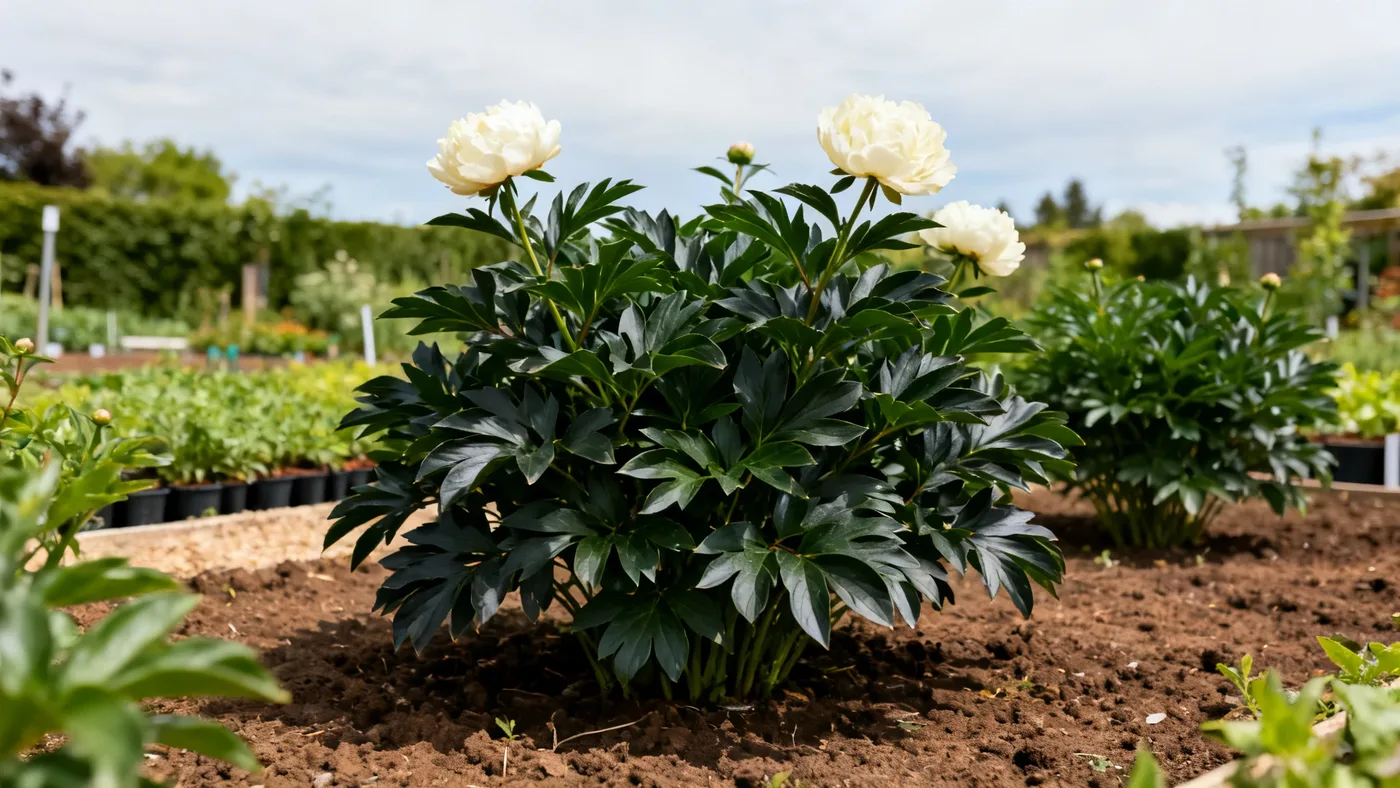
Best Soil for Duchesse de Nemours Peony: pH and Drainage Tips
Duchesse de Nemours Peony thrives in the right soil. Too much clay, poor drainage, or an off-target pH, and you'll fight reduced blooms, root rot, and stunted growth. The good news: soil preparation is straightforward, takes a day or two, and pays dividends for decades. This plant can live 50 years or more once established, so getting the soil right upfront is one of the highest-return investments you'll make in your garden.
In this guide, you'll learn how to test and amend your soil, what the ideal pH range is, and how to handle clay, sand, and problem sites. By the end, you'll know exactly what to do before you dig the planting hole.
Understanding Soil pH for Duchesse de Nemours Peony
Peony soil pH matters because it controls nutrient availability. Duchesse de Nemours Peony performs best in soil with a pH between 6.5 and 7.0. This range is neutral to slightly acidic or slightly alkaline tolerant, meaning you have a comfortable window. Soils outside this range can lock up phosphorus and potassium, the nutrients that fuel blooms.
Before you amend anything, test your soil. A simple test kit from a garden center costs a few dollars, or send a sample to your local extension service for a full report (usually $10 to $20 and worth every cent). The report tells you pH, nutrient levels, and organic matter percentage. That data guides your amendments.
If your soil is too acidic (below 6.5), add ground limestone in spring, following the package rate. If it's too alkaline (above 7.0), add sulfur in fall or early spring. Most amendments take weeks to work, so plan ahead and retest after 4 to 6 weeks.
Drainage Requirements and Why They Matter
Drainage is non-negotiable for Duchesse de Nemours Peony. Waterlogged soil invites botrytis blight, a gray mold that rots stems and buds, and phytophthora blight, which kills roots. Heavy clay that holds water after rain is one of the top reasons these peonies fail to thrive.
The ideal soil is fertile, humus-rich, well-drained loam. Loam is a balanced mix of sand (fast-draining), silt (moisture-holding), and clay (nutrient-rich). If your yard is pure clay, pure sand, or compacted, you need to amend. Amending soil for peonies means improving its structure so water moves through it freely but doesn't drain away so fast the plant dries out.
Test drainage yourself: dig a hole 12 inches deep and wide, fill it with water, and watch. If the water disappears within 4 hours, your drainage is good. If it sits for more than 4 hours, you have a problem. Clay and compacted soils often hold water for 24 hours or more. If that's you, incorporate 3 to 4 inches of compost and aged bark into the top 8 to 10 inches of soil, working it in well.
Step-by-Step: Amending Your Soil
Here's how to prepare your soil before planting Duchesse de Nemours Peony.
Materials You'll Need
- Soil test kit or extension service kit
- Compost or aged organic matter (2 to 3 cubic yards per 100 square feet of planting area)
- Peat moss or coconut coir (optional, for moisture retention)
- Bone meal or low-nitrogen, phosphorus-rich bulb fertilizer
- Limestone (if pH is too low) or sulfur (if pH is too high)
- Spade, rototiller, or garden fork
- Water source for settling amendments
Step 1: Test Your Soil
Use a soil test kit or contact your local cooperative extension office to collect a sample. Most extension services charge $10 to $25 and give you a detailed report with pH, nutrient levels, and amendment recommendations tailored to your region. This is the best starting point.
Step 2: Adjust pH if Needed
If your test shows pH below 6.5, apply ground limestone at the rate specified on the package. If pH is above 7.0, apply sulfur. Work it into the top 6 inches of soil and water in well. Wait 4 to 6 weeks, then retest. Do this in fall so amendments have time to stabilize.
Step 3: Break Up Compacted Soil
If your soil is clay-heavy or compacted, loosen it with a spade or tiller to a depth of 10 to 12 inches. Remove rocks, old roots, and debris. The goal is to create a loose, workable bed that drainage tests show drains in under 4 hours.
Step 4: Mix in Organic Matter
Spread 3 to 4 inches of well-aged compost or composted bark over the prepared area. Work it into the top 8 to 10 inches of soil using a spade or tiller, blending it thoroughly. This improves structure, adds nutrients, and increases water-holding capacity without creating a waterlogged layer.
Step 5: Add Phosphorus-Rich Fertilizer
Bone meal or bulb fertilizer provides the phosphorus that supports flowering. Sprinkle it across the amended bed at the rate on the package (typically 2 to 3 pounds per 100 square feet). Work it in gently with a fork.
Step 6: Water and Settle
Water the entire amended bed thoroughly. This settles the soil and helps amendments integrate. Wait 1 to 2 weeks before planting so the soil compacts naturally and you can see its true level.
Handling Problem Soils
Clay Soil Peonies
Clay soil is common in many regions and is not a dealbreaker, but it requires more effort. Clay holds nutrients well (good) but also holds water (bad). To grow Duchesse de Nemours Peony in clay, amend heavily with compost (4 to 5 inches instead of 3) and ensure your planting site is elevated slightly so water runs away. Avoid digging in clay when it's wet, as this compacts it further.
Sandy Soil
Sandy soil drains too fast and doesn't hold nutrients or moisture. Add 4 to 5 inches of compost and consider a thin layer of peat moss or coconut coir mixed in to increase water-holding capacity. Sandy soils benefit from a light mulch (1 inch of aged bark) after planting to conserve moisture during dry spells.
Compacted Urban Soil
Old construction sites and high-traffic gardens often have compacted, lifeless soil. If the top 12 inches feel hard and drainage tests show water sitting for 24 hours, your best move is to remove the top layer (8 to 10 inches) and replace it with high-quality compost or a blend of loam and compost. This is more expensive but takes the guesswork out and guarantees success.
Common Soil Mistakes and How to Avoid Them
Planting too deep. Peony eyes should be no more than 1 to 2 inches below the soil surface. Plant deeper, and your peony may never bloom. Measure carefully, and if your amended soil has settled unevenly, mound it slightly and adjust the planting depth before backfilling.
Skipping the pH test. It's tempting to assume your soil is fine, but pH mismatches are silent killers. A five-minute test saves years of frustration.
Mixing fresh manure into the planting hole. Fresh manure is too hot and can burn roots. Use only aged compost or aged manure that has sat for 6 to 12 months.
Ignoring drainage after planting. Even well-amended soil can become waterlogged if it's in a low spot where water pools. Plant on level ground or a slight mound, and avoid compacting the soil afterward.
Amending only the planting hole. If you amend just the hole and leave the surrounding soil tight, roots won't expand freely. Amend the whole planting bed, or at minimum a 3-foot-diameter circle around the planting site. Spacing for Duchesse de Nemours Peony is 3 feet apart, so a well-prepared 3-foot circle lets the plant reach its mature width of 24 to 36 inches without competing with poor soil.
Expected Results and Timeline
Proper soil preparation doesn't guarantee flowers overnight, but it sets the stage for them. Duchesse de Nemours Peony planted in fall in well-amended soil typically produces light blooms in year 2 and a full floral display by year 3 or 4. The plant's growth rate is moderate, reaching its mature height of 26 to 36 inches within 3 to 4 years.
If you've corrected drainage or pH, look for visible improvement in plant vigor (darker foliage, fuller stems) within the first growing season. A plant in poor soil will languish or fail to bloom; one in properly amended soil will respond noticeably.
For more on establishing and nurturing your peony after planting, see our care guide with growing tips that work. If soil drainage is adequate but your plant seems dry during blooming season, learn how to water Duchesse de Nemours Peony correctly.
Quick Reference: Soil Prep Checklist
| Task | Target pH | Drainage Test | Materials | Timeline |
|---|---|---|---|---|
| Test soil pH and nutrients | Aim for 6.5–7.0 | Water should drain in <4 hours | Soil kit or extension sample | Before amending |
| Adjust pH if needed | Add limestone or sulfur | Retest after 4–6 weeks | Limestone (acidic soil) or sulfur (alkaline soil) | Fall or early spring |
| Loosen compacted soil | Not applicable | Break up clay >12 inches deep | Spade or tiller | Before amending |
| Mix in organic matter | Not applicable | 3–4 inches of compost | Aged compost or bark | 1–2 weeks before planting |
| Add bone meal | Not applicable | Not applicable | Bone meal or bulb fertilizer | When working in compost |
| Water and settle soil | Not applicable | Full watering to integrate amendments | Water source | 1–2 weeks before planting |
| Plant Duchesse de Nemours Peony | Final pH 6.5–7.0 | Well-drained loam | Nursery-grown or division | Fall preferred |