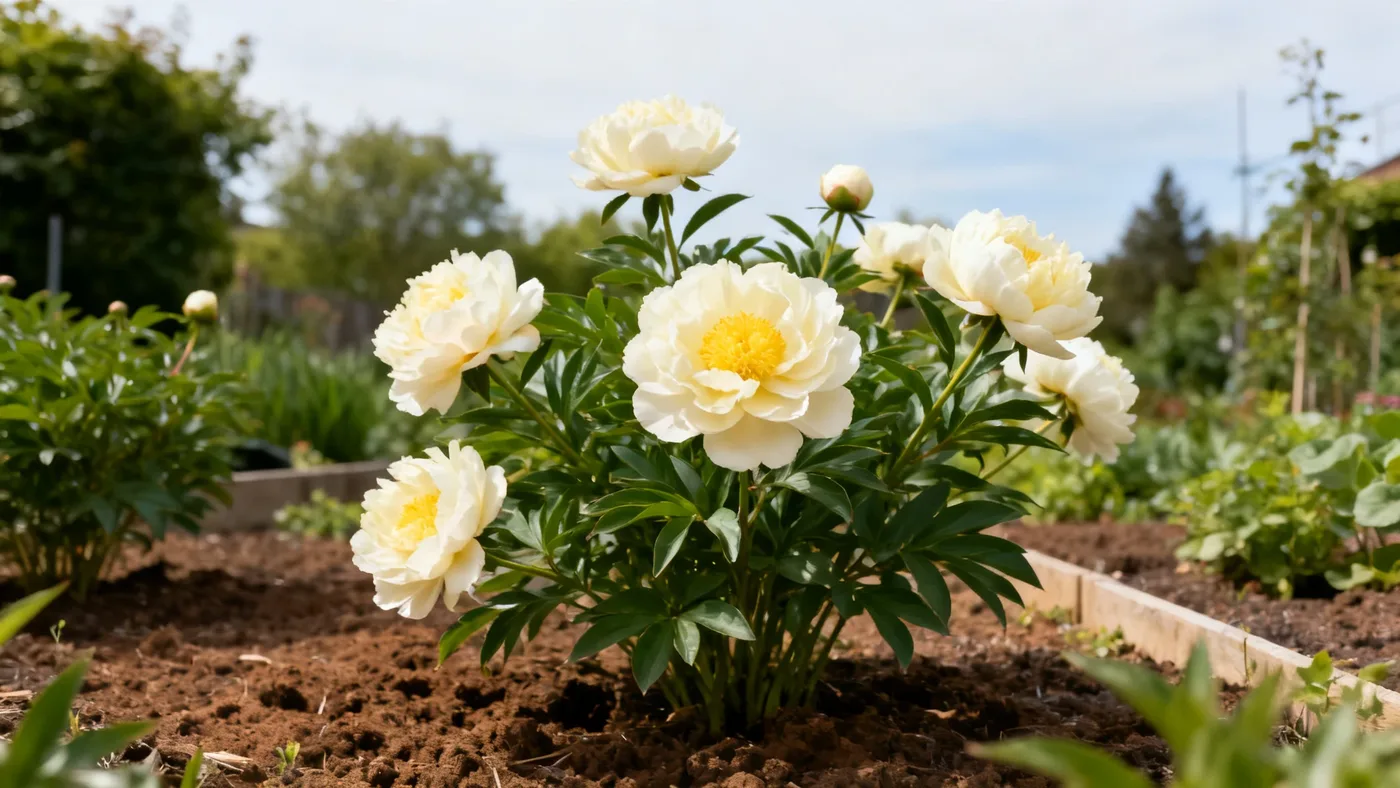
Duchesse de Nemours Peony Fall Color and Autumn Foliage
Late September through October is when Duchesse de Nemours Peony reveals one of its quieter charms: the bronze-red tones that wash across the foliage as temperatures drop. If you're noticing your peony plants shifting from dark green to russet, bronze, or deep red, that's normal and worth understanding. This seasonal change marks the plant's shift into dormancy, and how you respond to it will affect blooming next spring.
This is also the moment gardeners often panic. "Should I cut my peony back now?" is a common fall question. The answer is no, not quite yet, and timing matters.
Why Peonies Change Color in Fall
Duchesse de Nemours is a herbaceous peony, which means it dies back completely to the crown (the root structure) each winter. As day length shortens and soil temperatures cool, the plant withdraws energy from the foliage back into the roots to prepare for dormancy. That withdrawal is what triggers the color shift.
The bronze-red tones you see are caused by anthocyanin pigments that emerge when chlorophyll breaks down. Think of it as the plant's way of letting go. Unlike deciduous trees that hold autumn color for weeks, peonies move faster. Once the color appears, it intensifies for 2 to 4 weeks, then the leaves begin to dry, shrivel, and eventually drop.
The exact timing of this color change depends on your zone. In USDA zones 3 and 4, the shift often starts in late August or early September. In zones 5 through 8, expect it in late September through early October.
What the Bronze-Red Foliage Looks Like
Duchesse de Nemours foliage takes on rust, bronze, and deep red hues, sometimes with purple undertones. The color is not uniform. You may see some leaves still deep green while others are fully bronze, because the plant phases out different parts of the canopy at different rates.
The foliage remains deeply lobed and compound (just as it is all summer). Height at this stage is still the mature 26 to 36 inches, depending on soil and climate conditions. By late fall, as the leaves dry completely, they become papery and fragile.
This color phase lasts roughly 3 to 5 weeks from first appearance to complete dormancy, but that window shifts based on your first hard frost date. An early freeze can accelerate the process.
Fall Care While the Plant is Changing
During the color-change period, continue treating your peony as you would in summer, but with one key exception.
Do not cut the foliage back yet. Leave the bronze-red leaves on the plant. They are still manufacturing and transporting energy down to the roots. Cutting them off prematurely steals nourishment the plant needs to power next spring's buds. Patience here pays off in May.
Deadhead spent blooms if you haven't already. If any dried flowers remain from spring, remove them. Deadheading through the season redirects the plant's energy away from seed production and toward root and bud development, which is your goal as fall approaches.
Water consistently if fall is dry. Peonies are drought-tolerant once established, but consistent moisture through autumn helps the plant build reserves for winter. If your region receives regular fall rain, you don't need to add irrigation. If fall is dry, water deeply (1 to 2 inches per week, soaking to the root zone) until the first hard frost.
Do not fertilize now. Heavy nitrogen in fall stimulates tender new growth that will be killed by frost, wasting the plant's energy. If you fertilize peonies at all, do it in early spring when shoots first emerge, using a low-nitrogen, phosphorus-rich option like bone meal or bulb fertilizer.
When and How to Cut Back in Late Fall
The right time to cut your Duchesse de Nemours peony to the ground is after a hard frost has fully killed the foliage. A hard frost is when temperatures drop to 28°F (-2°C) or lower for several hours. This typically occurs in late October or November, depending on your zone.
Before the frost comes and the leaves turn paper-thin and start to drop, your peony still looks fairly intact. It's tempting to tidy it up early. Don't. Wait until the foliage is clearly dead, shriveled, and no longer transferring energy.
How to cut back:
- Use sharp pruners or hedge shears.
- Cut all foliage and stems down to approximately 2 inches above the soil surface (at the crown, where you see the buds of next year's growth).
- Remove all cut material and discard it (or compost it if your compost reaches high heat). Do not leave debris piled around the plant, as it can harbor fungal spores.
- Do not expose the crown itself. The soil level protects the dormant buds.
A common mistake is cutting too early and leaving the plant vulnerable to late-season pests and diseases, or cutting too late and forcing the plant to waste energy on foliage it's already given up. Waiting for the hard frost is the golden rule.
Understanding Winter Dormancy
After you cut the plant back, your Duchesse de Nemours peony will look entirely gone. That's correct. It has no winter interest (no evergreen foliage or structural appeal). The entire plant rests underground until spring.
This dormancy is essential. Peonies grown in mild zones where winter temperatures never drop much below 40°F may struggle to bloom reliably because they need a sustained cold period to break dormancy and set buds. In zones 3 through 8, winter cold is rarely a problem.
Once you've cut the plant back, your work is done. Do not cover the crown with mulch piled higher than 2 inches; excessive mulch can trap moisture and invite rot. A light 1 to 2 inch layer of compost or aged mulch is fine. Snow cover in winter provides natural insulation.
Fall Color as a Sign of Health
The appearance of bronze-red foliage in fall is actually a good sign. It means your plant is mature, established, and moving through a normal seasonal cycle. Young plants may show less dramatic color change. Plants under stress (severe drought, pest damage, disease) may drop leaves early without the bronze phase.
If your peony shows rich fall color year after year, that tells you the plant is healthy, well-watered through late summer, and ready for dormancy on schedule. If you're concerned about the appearance or timing, refer to our full care guide for Duchesse de Nemours Peony for seasonal troubleshooting.
For more on establishing a mature, healthy plant in the first place, read our guide on planting Duchesse de Nemours Peony. Proper planting creates the foundation for strong fall color and reliable spring blooms.
Photographing Fall Foliage (and Why It Matters)
The bronze-red phase is brief, and many gardeners miss it because they're focused on winter prep. If you like to photograph your garden or document your plants, the 2 to 4 weeks of rich fall color is worth capturing. It's a useful reminder that peonies change through the seasons and that what looks "done" in November is actually resting and gathering strength.
Fall Color Quick Reference
| Task | Timing | Notes |
|---|---|---|
| Monitor for color change | Late August to early October (varies by zone) | Look for bronze, rust, and red tones in foliage |
| Deadhead spent flowers | Through September | If not done in summer, finish now |
| Water if dry | Until first hard frost | 1–2 inches per week if rainfall is minimal |
| Do NOT cut back | Before hard frost | Let foliage transfer energy to roots |
| Cut back to crown | After hard frost (28°F or below) | Cut 2 inches above soil; remove all debris |
| Light mulch | After cutting back (optional) | 1–2 inches only; do not bury the crown |
| No fertilizing | Fall and winter | Fertilize only in early spring |