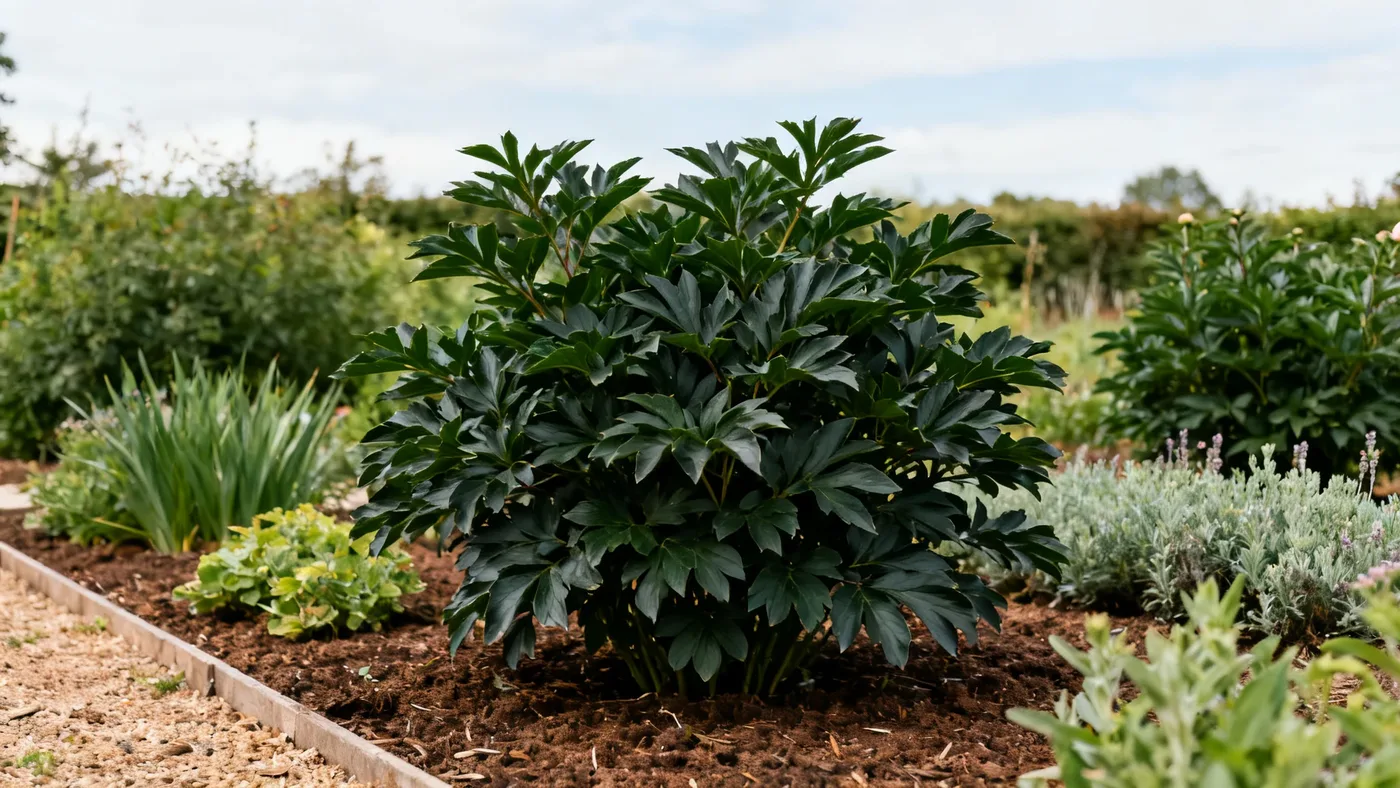
10 Landscape Ideas for Duchesse de Nemours Peony in Your Yard
Duchesse de Nemours Peony is one of the most versatile plants in the perennial garden. Its creamy white blooms with pale yellow flushed centers and strong, sweet fragrance make it a natural focal point in early to mid-season gardens (typically May, depending on your zone). At 26-36 inches tall and equally wide, this cultivar fits seamlessly into borders, foundation plantings, and mass displays. Whether you're building a mixed perennial bed or planning a cutting garden, Duchesse de Nemours offers a reliable, long-lived anchor that will persist for 50 years or more with minimal care.
Below are 10 proven landscape applications, each with specific planting strategies and companion choices drawn from real garden experience.
1. Mixed Perennial Border with Iris and Salvia
One of the most popular ways to use Duchesse de Nemours is as a centerpiece in a mixed perennial border. Plant the peony 3 feet from neighboring plants to allow for its mature width of 24-36 inches. Pair it with bearded iris in the foreground (iris bloom earlier and won't compete for spring moisture) and add salvia in the mid-ground for summer color after the peony fades. This creates a tiered effect: iris flowers in April, peony in May, and salvia continuing through June and beyond.
The key to this arrangement is spacing and moisture. All three plants prefer consistent moisture and full sun (6+ hours daily), making them natural companions. Iris handles the front edge, Duchesse de Nemours sits back at its mature height, and salvia fills gaps and extends bloom season. Choose a location with fertile, humus-rich, well-drained loam. This border structure works in USDA zones 3-8 and requires minimal deadheading beyond removing spent peony blooms to redirect energy to the roots.
Practical takeaway: Plan your border depth to accommodate the peony's mature 24-36 inch width. Space iris 18-24 inches from the peony center, and set salvia 24 inches away. This prevents overcrowding as plants reach full size in years 3-4.
2. Cottage Garden Focal Point with Catmint and Alliums
Cottage gardens thrive on abundant bloom and romantic layering, and Duchesse de Nemours is a perfect anchor plant. Surround it with catmint (Nepeta), which has airy purple-blue flowers and soft foliage, and ornamental alliums for textural contrast. The peony's dense, dark green deeply lobed compound leaves create a handsome backdrop even after the blooms fade. Plant alliums (such as tall varieties 24-30 inches high) to bloom just as the peony is finishing, creating a seamless transition through May and June.
In a cottage garden, spacing is more informal than a structured border, but the 3-foot rule still applies: maintain at least 3 feet from the peony's center to other permanent plantings. Catmint naturally spreads and softens hard edges, while alliums provide vertical interest and attract pollinators like bees, which are drawn to the peony as well. The combination of the peony's sweet fragrance, catmint's minty scent, and the alliums' subtle onion aroma creates a multi-sensory garden experience.
Practical takeaway: Don't crowd the peony. Even in a looser cottage setting, give it breathing room. The payoff is better air circulation (reducing disease risk), fuller mature plants, and a more authentic garden silhouette.
3. Foundation Planting for Curb Appeal
Duchesse de Nemours works beautifully in foundation plantings, especially on the east or north side of a house where it receives 6+ hours of sun but avoids intense afternoon heat. At 26-36 inches tall, it's tall enough to anchor a foundation bed without blocking windows, and its spring blooms draw attention to the home's entry. Plant a single specimen 3-4 feet from the foundation (soil there is often drier and compacted) and mulch lightly with 2 inches of compost to maintain consistent moisture during the growing season.
This location showcases the peony's longevity as a design asset. Unlike many foundation shrubs that require replacement every 5-10 years, Duchesse de Nemours will remain vigorous for decades, becoming more established and floriferous over time. The creamy white flowers are visible from the street, and the foliage transitions to bronze-red tones in fall before dying back, providing seasonal interest. In southern climates (zones 7-8), light afternoon shade is acceptable and may extend bloom time.
Practical takeaway: Avoid planting directly against the house. The 3-4 foot setback allows air circulation around the crown, critical for preventing botrytis and other fungal issues in humid seasons.
4. Cutting Garden Bed Layout
If you grow peonies for cut flowers, dedicate a section of your vegetable garden or a utility bed to Duchesse de Nemours. Plant multiple specimens 3 feet apart to create a small grove. This spacing provides easy access for cutting without damaging the plants, and the peonies will fill a larger area as they mature. Each plant typically yields 5-15 cut-quality stems per year once established (year 3-4 onward), with blooms lasting 1-2 weeks in a vase.
Cutting gardens benefit from consistent moisture and rich soil; amend the bed with compost before planting. Peonies support themselves better when surrounded by other plants, so you might interplant with garden roses or ornamental grasses that won't compete for nutrients. The peony's strong, sweet fragrance makes it a desirable cut flower for arrangements, and the long vase life means customers (if you sell bouquets) or friends will keep your flowers for extended enjoyment.
Practical takeaway: Cut stems in early morning when they're fully turgid. Leave at least 2-3 stems on each plant to fuel next year's growth. Never remove more than 1/3 of a mature peony's blooms in a single season.
5. Border Edge with Baptisia and Roses
Plant Duchesse de Nemours at the back of a mixed border and use it to echo or bridge between other key plants. Position tall baptisia (false indigo) alongside for its striking blue flowers in late May, just as the peony blooms are finishing. Then intersperse roses (shrub roses like 'David Austin' types) throughout to provide continuous color and texture. The peony's pale yellow-flushed center echoes softer rose tones, creating a cohesive color palette.
This design works because baptisia and roses, like Duchesse de Nemours, are long-lived perennials that prefer full sun and well-drained soil. All three are relatively low-maintenance once established. The peony's dense foliage masks the leggy lower stems of roses, while the rose's ongoing bloom extends garden interest well beyond the peony's May window. Space the peony 3 feet from roses to prevent disease spread and allow each plant to reach full size.
Practical takeaway: Group peonies in odd numbers (3, 5, or 7) at the border back for more visual impact than a single specimen. This also maximizes cut flower production without compromising garden display.
6. Mass Planting for Dramatic Impact
For a truly show-stopping spring display, plant 3, 5, or 7 Duchesse de Nemours peonies in a cluster or drifting pattern, spaced 3 feet apart center-to-center. At full maturity, this creates a unified mound of creamy white blooms that's visible from across the yard. Mass plantings are especially effective in large gardens, estates, or public landscapes where you want a strong seasonal statement.
Maintenance for a mass planting is straightforward: consistent moisture in the growing season (spring through early July), light fertilization with phosphorus-rich formula (like bone meal) in early spring, and cutting back to the ground in late fall after frost kills the foliage. The dense planting discourages weeds and the plants support each other without excessive staking. By year 4, a 5-plant cluster will form a 12-15 foot-wide feature that blooms reliably for half a century.
Practical takeaway: Position mass plantings where they're visible from sitting areas and main entry points. Peak bloom is short (2-3 weeks), but the foliage remains attractive through summer, and the plants serve as reliable anchors for seasonal design schemes.
7. Season Extension with Companion Succession
Build a peony-anchored bed that blooms continuously from April through July by pairing Duchesse de Nemours with earlier and later bloomers. Start with spring bulbs or early iris in front, plant the peony in the middle, then add catmint, alliums, and late-season salvias or rudbeckia in the back and sides. This strategy maximizes garden interest and pollinator activity, especially bees, which are naturally drawn to peony blooms.
The peony itself blooms early to mid-season (typically May in most zones 3-8 gardens), so pair it with plants that bridge the spring-to-summer gap. Tall alliums (30+ inches) will bloom as the peony fades, and summer-long salvias and catmint carry color into June and beyond. All these plants thrive in full sun and well-drained loam with consistent moisture during the growing season, so they're natural companions from a care perspective as well.
Practical takeaway: Map your succession planting on paper before you dig. Note bloom time, mature height, and spacing. This prevents the frustration of overcrowded beds and ensures continuous visual interest through the growing season.
8. Underplanting with Low-Growing Perennials
Because Duchesse de Nemours reaches 26-36 inches tall and takes a few years to fill its mature 24-36 inch width, underplanting with low-growing companions maximizes early garden interest. Consider creeping thyme, sedum, catmint's dwarf varieties, or dwarf alliums around the base. These fill gaps in years 1-2 and provide ground-level color and texture before the peony reaches full size.
Underplanting also serves a functional role: it shades the peony's crown and keeps it cool during hot summers, which can reduce botrytis blight risk. Choose low growers that won't compete for nutrients. The peony's deep root system will access moisture below the shallow-rooted companions. Avoid very dense underplanting that restricts air circulation around the base, which is critical for disease prevention.
Practical takeaway: Once the peony reaches full size (year 3-4), the underplanting will likely be shaded out. This is normal and acceptable. The peony's dense foliage becomes the primary ground cover, and you can remove shaded underplants without harm to the peony.
9. Specimen Planting in a Lawn or Island Bed
A single Duchesse de Nemours planted as a specimen in the lawn or a raised island bed becomes a garden focal point, especially during May bloom. This works best in open settings where the plant receives full sun (6+ hours) and is visible from multiple angles. The peony's neat mounding habit (24-36 inches wide at maturity) fits naturally into a landscape without looking awkward or oversized.
To succeed as a specimen, ensure the planting site drains well and won't become waterlogged during wet springs. Amend the planting hole with humus-rich compost and fertile soil. Mulch lightly (2 inches) to retain moisture while allowing air circulation. In island beds, keep the peony as the centerpiece and resist the urge to surround it with too many companion plants. A few low growers or a simple ring of perennials is more elegant than a crowded mixed planting.
Practical takeaway: Avoid planting specimen peonies in wet, heavy clay soils. If your yard is clay-heavy, amend the planting hole generously and consider a raised bed to ensure adequate drainage.
10. Shade-Tolerant Backdrop for Shade Gardens
While Duchesse de Nemours prefers full sun, it tolerates light afternoon shade in hot southern climates (zones 7-8). If you have a partially shaded bed on the north side of a building or beneath high tree canopy that receives 4-6 hours of morning sun, this peony can work as a backdrop to shade-loving perennials. Bloom production may decrease compared to full-sun plantings, but the plant will still flower reliably and provide its beautiful foliage.
This application is less common but valuable for gardeners with limited sunny space. Pair the peony with shade-tolerant companion plants like hosta, brunnera, or hellebores for a cool-toned garden. Water consistently, as shade gardens tend to have drier soil than you'd expect. Ensure excellent drainage to prevent root rot in shaded locations where moisture lingers longer. The peony's long lifespan means you're making a 50-year commitment, so site selection and soil preparation are worth the effort.
Practical takeaway: If choosing between a sunny site with competition and a partially shaded site with space, the shaded site is better for the peony. Afternoon shade in hot zones actually reduces heat stress and can extend the bloom window by a few days.
Quick Reference: Duchesse de Nemours Landscape Planning Guide
| Landscape Use | Spacing (Center-to-Center) | Sun Requirement | Best Companion Plants | Mature Dimensions |
|---|---|---|---|---|
| Mixed perennial border | 3 ft | 6+ hours full sun | Iris, salvia, catmint | 26-36 in tall × 24-36 in wide |
| Cottage garden | 3 ft | 6+ hours full sun | Catmint, alliums, roses | 26-36 in tall × 24-36 in wide |
| Foundation planting | 3-4 ft from house | 6+ hours; light shade in zones 7-8 | Low-growing sedums, thyme | 26-36 in tall × 24-36 in wide |
| Cutting garden | 3 ft | 6+ hours full sun | Roses, ornamental grasses | 26-36 in tall × 24-36 in wide |
| Mass planting (3-7 plants) | 3 ft | 6+ hours full sun | No interplanting; allow room to spread | 26-36 in tall × 24-36 in wide per plant |
| Specimen (lawn, island) | n/a (single plant) | 6+ hours full sun | Optional low growers at base only | 26-36 in tall × 24-36 in wide |
| Shade-tolerant backdrop | 3 ft | 4-6 hours morning sun; afternoon shade | Hosta, brunnera, hellebores | 26-36 in tall × 24-36 in wide |
Duchesse de Nemours reaches full mature size in 3-4 years and can persist for 50+ years with minimal care. For specific growing requirements, see our complete care guide. If you're ready to add peonies to your garden, learn what to look for in our buying guide to select healthy plants and get them off to the right start.